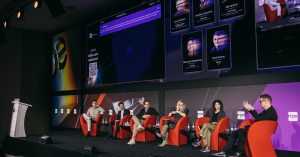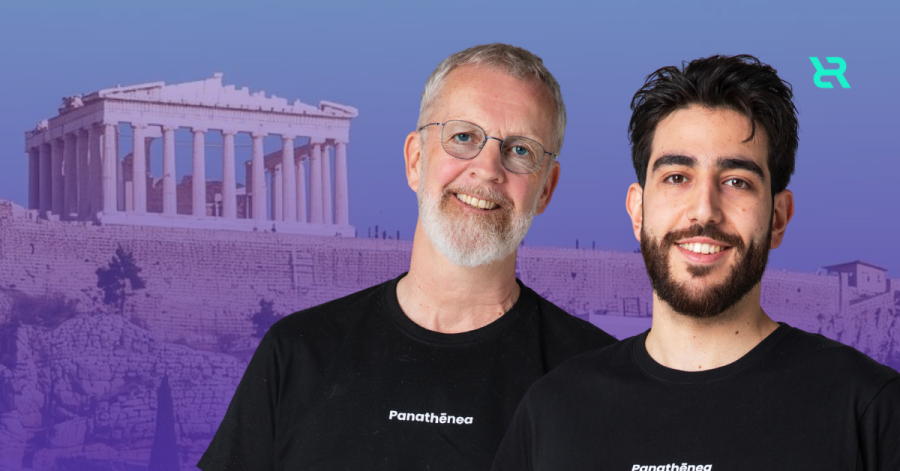
Behind it stand two very different but aligned forces: Lars Rasmussen, co-founder of Google Maps, and Lefteris Katsiadakis, the young CEO building Panathēnea into a defining startup festival for Southeast Europe.
Inspired by the ancient Greek idea of competition as a driver of collective excellence, Panathēnea is positioning Athens as a place where founders, investors, artists, and operators raise the bar.
Panathēnea is openly ambitious about becoming a defining startup festival for Southeast Europe, with scale, density, and dozens of side events across Athens. Talk to me about this year’s edition and line-up. What should we expect or be excited about?
Lefteris: For this year’s lineup we’re having some amazing investors, operators and founders from all over the world: Index Ventures, Sequoia, Atomico, NVIDIA, OpenAI, as well as unicorn founders from Deel, Fuse Energy, and Runway, and the team behind EU-INC. So it’s a fully European festival. This is the first time we’re bringing this density of global capital and operators to Athens at once.
Panathēnea has already proven it can convene people. The next question is about your ethos. What are you trying to enable for founders and builders that is still different from the broader European event circuit?
Lars: Panathēnea is a reimagined ancient festival. We wanted to build a big tech event, and I learned about the ancient Panathēnea, the sister festival to the Olympics, both held every four years. Everyone would go to Olympia every four years for sports. Every other four years, people from across the Greek world would come to Athens for a 12-day festival organized mostly around competition whose purpose was discovering the next big thing to advance human excellence.
We looked at a bunch of current festivals and found that an ethos focused on the people who are going to create a better future works best for us. We’re a lot like Slush in this respect, being a non-profit organization staffed entirely by students. I’m part of a big group of mentors surrounding this team, but it’s students or recent graduates running it, and we’re approximately 50 unpaid volunteer mentors.
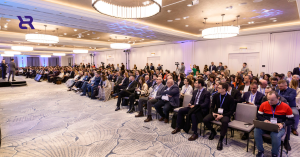
Last year it was purely a tech conference: 44 countries present, more than 3,000 people, a strong lineup, and some cultural hints through tech-focused conversations.
This year, we’re creating a separate arts component at the same time. This part will be smaller than the startup side since this is the first edition we’re branching out. But as it matures: film, music, poetry, fine arts, social arts, it could eventually become bigger than the startup festival.
There’s an idea running through Panathēnea that progress comes from people getting better together, bridging tech, arts, and culture. Tell me about the way collective improvement means more than the individual progress of every participant. What qualities are you aiming to nurture across the different components of the festival?
Lars: Right now, the arts and the tech space are not exactly on the best of terms. As AI advances at a breathtaking pace, it touches other industries, and one of our sub-missions is to bring tech and the arts closer together.
There’s also an almost philosophical aspect to it. Culture helps steer human development in a direction that benefits humanity. We’re looking forward to discussions that address big questions together. The prospect of AI displacing workers, whether we’re talking artists or programmers, creates extra tension. We want to create a constructive forum to debate how to reconcile these industries.
You’re a nonprofit by choice. What responsibility does that impose on you, and does it make your job harder rather than easier?
Lefteris: We want to have the same impact on Greece as Slush has had on Finland: investing in the next generation and creating the space for this festival to become a movement within the ecosystem. Our team changes every year, similar to the Slush model. It doesn’t make the job harder; it just makes it more meaningful.
Lars: As we’re encouraging entrepreneurship, it’s easier to accomplish this without the added pressure of bringing profit to stakeholders. This way, we can focus more on the next generation of founders who might not be able to afford expensive tickets.
For a CEE founder deciding whether to attend, what is the clearest return they should expect?
Lefteris: They’ll find real value because we’re bringing together the European ecosystem, from top-tier investors to strong founders who can create meaningful connections. Last year, the US was actually the second most represented country, and this year we are bringing even more people from across more regions.
Plus, Panathēnea is an experience that unfolds across the city of Athens, with deep roots in the ancient festival and a fresh spirit shaped by a young team.
Lars, after building and scaling in the US during the dot-com boom, you chose not just to move to Greece, but to actively invest time and capital into the local ecosystem. What did you see here that convinced you this wasn’t just an interesting place to live, but a place worth committing to long term?
Lars: It’s a fun story. My wife is a Greek goddess, and we were investing together. Back in 2012, at the height of the financial crisis, we considered moving to Greece. I even gave a talk saying that financial crises are actually great times to start entrepreneurial journeys, as Google Maps grew during the downturn after the dot-com boom.
The idea was that it’s easier to convince people to work for equity when no one is hiring. But that talk was short. We met about five startups, and the mood in Athens was gloomy. The GDP had dropped by 25%, ATM withdrawals were limited to 50 euros a day, unemployment reached 50%. People were looking abroad for opportunities.
For that and other reasons – including our daughter deciding to attend university in New York – we didn’t move then.
We returned during the pandemic. At that point, we had a portfolio of around 100 startups globally. We expected a good lifestyle: sunny weather, great food, strong quality of life, and planned to manage our investments from here. It didn’t even occur to me to ask whether a meaningful ecosystem had emerged in the seven or eight years since 2012.
But it had. We met one startup socially distanced in our backyard. It became our first Greek investment. Word spread quickly. Startups began reaching out. We discovered hundreds of startups, many VCs, and real momentum. It’s one of the youngest ecosystems in Europe – and arguably one of the fastest-growing.
We saw how everyone travels to Helsinki for Slush. For a week, the conversation centers on the ecosystem. It inspires people and creates deep connections between local and global players. Lefteris and I met there, and we adopted that methodology for Greece, hopefully with similar ambition and results.
Lars, you’ve seen cycles where technology moved faster than markets could absorb it. How does that inform how you think about innovation today?
Lars: One thing I’d like to contribute to the Greek ecosystem is something we should learn from America: this intense can-do attitude and optimism.
A lot of the Maps story happened in Sydney, Australia. At the time, people were asking whether it was even possible to build a world-changing startup from there. I think every founder should answer that question for themselves. Today, no one asks that question anymore in Sydney, because the ecosystem matured.
In Europe we don’t always grow up with that same confidence. America has produced multiple trillion-dollar companies; and it’s not an accident that four of them – Microsoft, Apple, Google, and Facebook – were founded by students. Americans assume that’s normal. That’s a mindset taught early.
What other ways are there to cultivate this mentality that don’t take an entire generation of differently educated people?
Lars: Physical spaces where startup-minded people can spend time together, not just talent density but conversation density. The festival creates that. It’s intoxicating to be surrounded by like-minded people where meetings naturally happen. But this change is a process and it doesn’t happen overnight.
Lefteris, you’re building Panathēnea from a different generational vantage point. What pressure points are shaping this generation of builders?
Lefteris: The mentality is changing. You can see students wanting to build startups while still in university. The goal is no longer to build something just for Greece, but something European or global.
Young founders want to build world-class products from emerging markets not only for their home country, but across Europe. Founders are thinking pan-European, globally even. Initiatives like EU-INC exist to reflect this mindset shift.
As you approach this year’s edition, what are you personally most curious or excited about?
Both: The party!
Lefteris: We’re bringing together different tribes to bridge perspectives and expose ambitious people to new ideas and lenses.
Lars: The lineup this year is incredible. Not just successful founders and investors, but big thinkers who shape conversations about the future.