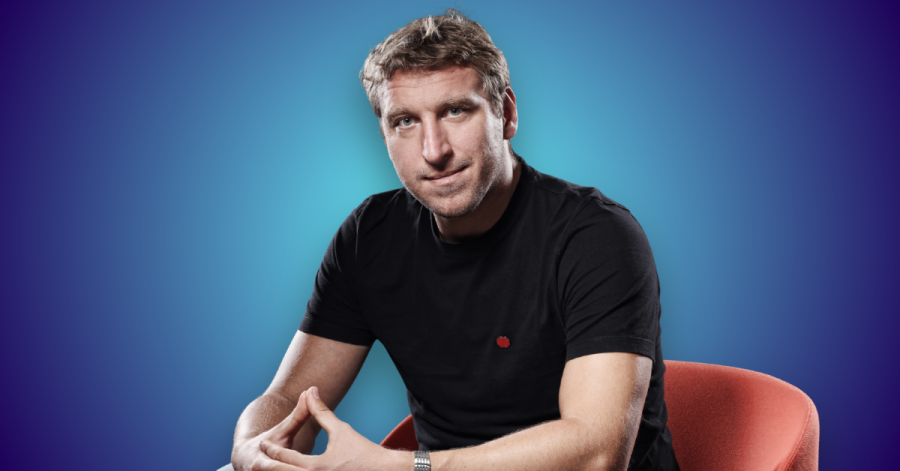

Building a globally competitive gaming company from Serbia struck most as wishful thinking back in the early 2010s. Despite the scepticism, Branko Milutinović and his co-founders launched Nordeus from Belgrade. Now in 2016, their flagship game Top Eleven counts more than 300 million registered users, and in June 2021 Take-Two Interactive (the publisher behind GTA, NBA 2K, and Red Dead Redemption) acquired the studio.
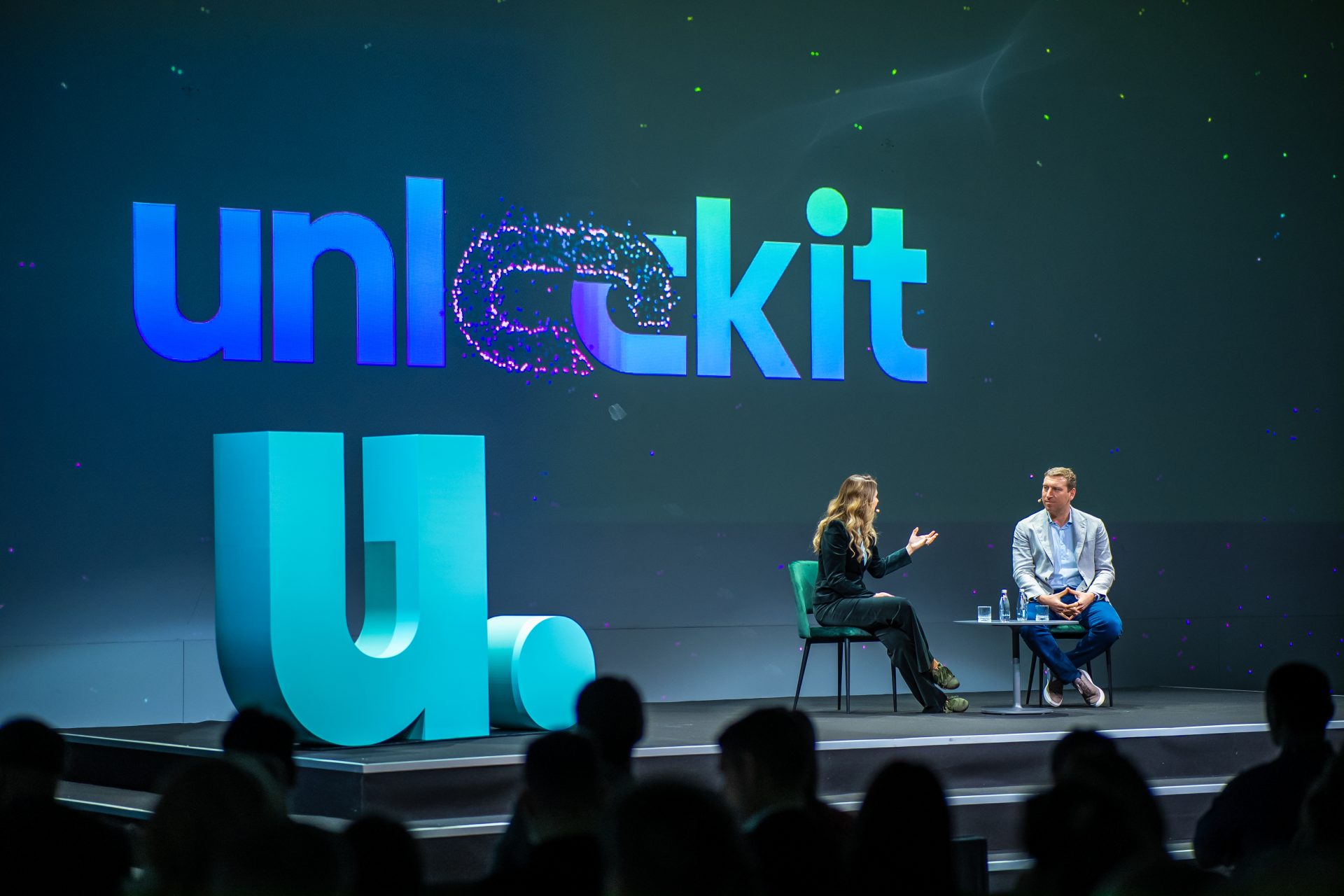
Speaking at the recent unlockit conference and in a subsequent interview with The Recursive, Milutinović unpacked the decisions, disciplines, and challenges that carried Nordeus from startup to scaleup to successful exit.
Global mindset shaped their decisions from the beginning
The founding premise was deliberately ambitious. “If you want to build something meaningful, you cannot think locally,” Milutinović told the unlockit audience. “From the very beginning, we were building Nordeus for the global market. That mindset shaped every decision we made and allowed us to compete with companies from much larger ecosystems.”
That was not rhetorical. It meant designing Top Eleven for players in dozens of markets simultaneously, benchmarking against studios in London and Helsinki rather than in the immediate neighbourhood, and accepting that the path to scale ran through global distribution, not regional comfort.
Equally foundational was the decision to stay bootstrapped for roughly a decade. Milutinović frames profitability not as a financial milestone but as a strategic tool. “Profit gives you freedom,” he pointed at unlockit. “When your company generates its own cash, you can reinvest, experiment, and build the next product without depending on external capital. Profitability is not just a financial metric, it is what allows a company to stay independent and think long term.”
So I couldn’t miss to ask him afterwards, looking at the capital landscape in the Balkans, whether he would counsel regional founders to sometimes even avoid venture capital. He noted: “In the early stages of development, if you already have product-market fit and customers across different markets, remaining completely independent is difficult, but not impossible, and increases the risk of becoming successful.”
That being said, he insisted on the underlying logic: delight users, grow organically, and let the business fund itself wherever possible.
The only KPI that truly matters
Nordeus’s product philosophy follows that vision and mission. “At the end of the day, the only KPI that truly matters is whether people truly love your product,” Milutinović said in his keynote.
“Technology, growth strategies and funding matter, but if users don’t genuinely care about what you are building, none of it will sustain over time.” Running Top Eleven as a live game for almost sixteen years has tested that conviction repeatedly.
Trends arrive, from new monetisation mechanics, genre shifts to platform changes; and the temptation to chase them is real. What Nordeus refused to abandon, Milutinović says, is putting players at the centre: “Quality has always been non-negotiable for us. That requires alignment across the entire company — a shared understanding of what ‘quality-first’ really means in practice, not just as a slogan.”
Team construction follows directly behind product quality in his hierarchy of priorities. “Building the right team is the hardest and most important job a founder has,” he highlighted. “For many years I personally interviewed every candidate, because the quality of the team ultimately determines how far a company can go.”
That hands-on approach eventually had to give way to delegation, a transition Milutinović describes as one of the harder personal evolutions a founder faces. “As companies grow, founders also have to evolve. You need to let go of things you once loved doing and trust people who are better at them. Leadership becomes less about doing and more about enabling others to succeed.”
The lesson he shares from projects that never reached market reinforces the same point: falling in love with an idea or a technology, rather than with the problem it solves for real users, is where promising efforts stall.
The longevity of Top Eleven, fifteen years in a genre where most titles disappear within months, reflects both principles working together. Milutinović credits the game’s survival to continuous iteration that never lost sight of the core experience, and to a willingness to listen to the market rather than defend internal assumptions. “We were faced with challenges when we were not focused on the long-term vision, or when we were too rigid in our approach,” he acknowledged.
“What worked for us was the flexibility to listen to the market, adapt, and iterate, while not losing sight of the players.”
Joining an industry giant means a shift in responsibility
The acquisition by Take-Two Interactive in June 2021 was the most consequential decision Nordeus’s founders made: “We did not make the decision to become part of Take-Two lightly,” he commented for The Recursive. “For my co-founders and me, culture has always been one of the most valuable pillars we’ve built at Nordeus. Finding a company that aligns with our culture was non-negotiable.”
The shared conviction around building games that players return to for years, combined with Take-Two’s stated commitment to creative independence for its studios, gave the Nordeus team confidence that the deal would not erase what they had built.
The most significant shock after merging wasn’t just the sheer scale of Take-Two, shared Milutinović, but “the realization of the massive operational trust the company places in its key studios”. Onboarding into the Take-Two ecosystem revealed a much broader horizon: the opportunity to act as a center of excellence that can take stewardship of legendary titles across the entire corporate portfolio.
That shift, from managing one successful game to steering multiple global franchises, he describes as “a profound shift in responsibility”. Change that effectively turned a regional studio into a strategic hub.
His advice to founders weighing M&A?
“Be very clear about your values and long-term vision before entering the process, especially if you’re thinking about the next 10 or 20 years.”
CEE: Deep capability, not cheap labour
Milutinović famously said that when Nordeus just started, everyone thought they were “idiots” for trying to build a gaming company in Belgrade. So, I wondered about misconceptions he sees nowdays. In 2026, what is the one thing about the CEE ecosystem that outsiders (and insiders!) still fundamentally misunderstand?
Milutinović is direct about it: “Many people still see CEE primarily as a source of affordable talent,” he notes. “The real advantage of this region is not cost. It is the deep technical capability and the quality of engineering talent that can compete anywhere in the world.”
The problem, he argues, is that much of that capability has been channelled into outsourcing rather than into building proprietary products. The unlock code for studios that want to make the transition? Treating themselves as their own most prestigious client, Milutinović explains: “This requires a disciplined ‘internal venture’ strategy where a studio treats itself as its own most prestigious client, consistently dedicating a portion of its best talent and profits to R&D and proprietary prototyping.”
The shift is ultimately one of perspective, moving from the stability of project-based delivery to the long-term scalability of product ownership, Milutinović elaborates further. “By taking the deep domain expertise gained from years of global collaboration and applying it to original concepts, a regional studio can bridge the gap between ‘building for others’ and ‘building for the world’. It’s about using the reliability of the service business as a financial and intellectual springboard to master the final pillars of IP success: global distribution, brand building, and direct-to-consumer data.”
The second thing people misunderstand is culture. There is a resilience here that you cannot easily teach, he points:
“When you build companies in environments that have gone through instability, you develop a strong problem-solving instinct. You learn to adapt, to take responsibility, and to push through constraints. That mindset is a competitive advantage. Probably, it is one of the reasons Nordeus is successful today.”
Problems worth solving — and passing the knowledge on
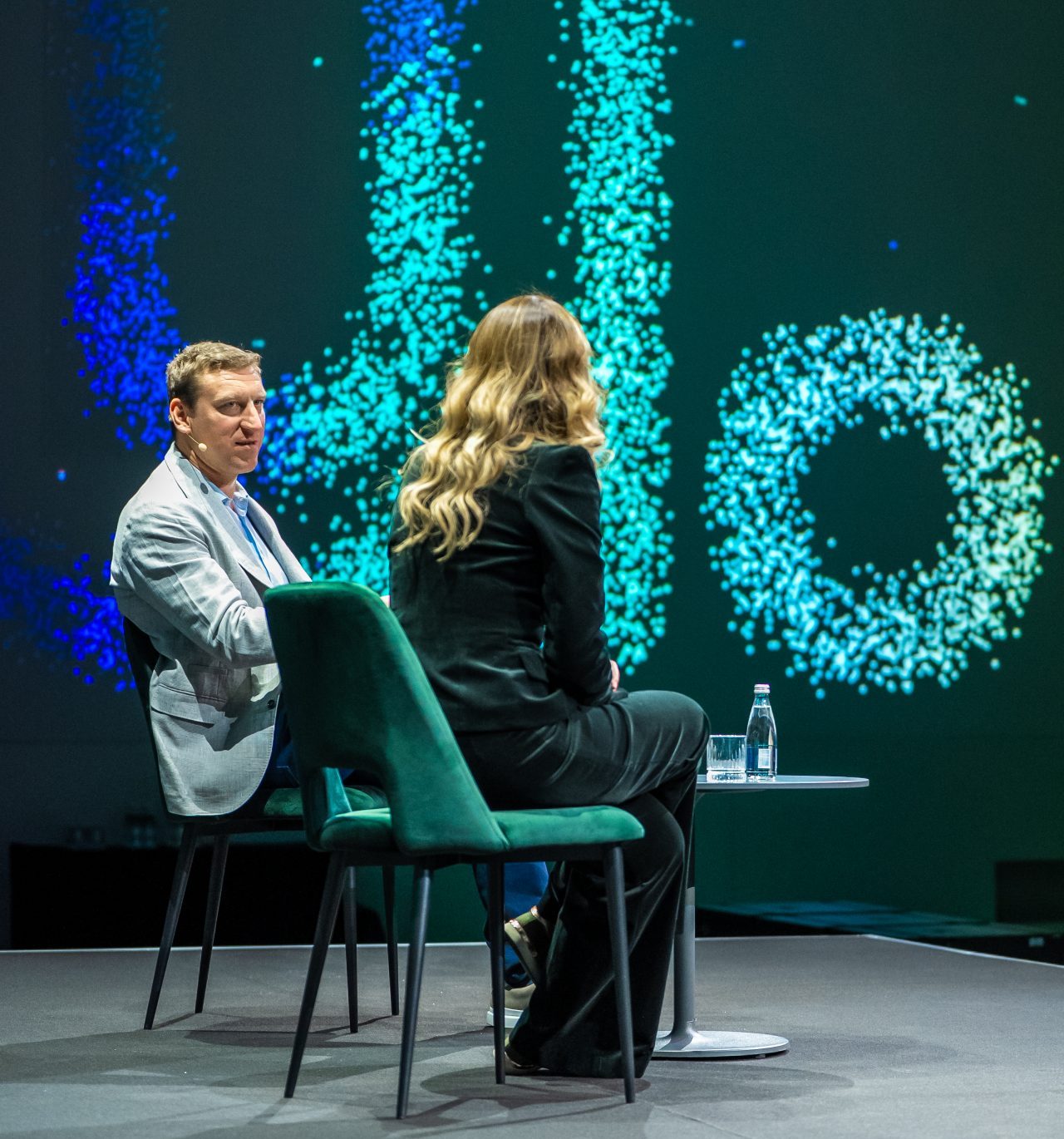
Brain drain compounds some of the above mentioned challenges (and opportunities). When asked to share his thoughts on how we can keep the talents, Milutinović reframes the conventional narrative: “It’s not enough to provide jobs; we must provide problems worth solving. Local experts stay when they are given the autonomy to lead global projects from home.”
For those who have already left, he resists treating departure as permanent loss. “If we create a regional ecosystem with many high-quality opportunities and a high quality of life, they will return as ‘Brain Gain’ — bringing expert know-how, global networks, and capital back home.” He sees early signs of that return in Belgrade and expects the trend to accelerate over the next decade.
The Nordeus Foundation, co-founded by Milutinović in June 2021, channels the same long-term logic into education. Through the Makers Labs programme, the Foundation brings hardware, software, and mentorship directly into Serbian high schools, enabling students to build autonomous vehicles with robotic arms, drones, medtech solutions, video games, automated solar chargers, renewable energy systems, smart city concepts, and even rockets — well before they graduate.
“It’s about helping young people acquire competencies, skills, and knowledge needed to thrive in the new economy, not just in theory but in the real world,” Milutinović points. He is emphatic that the work is collaborative: “It brings together schools, communities, businesses, mentors, and industry professionals so that education becomes a shared effort, not something isolated in classrooms.”
Advice for the new generation of founders
Mentoring the next generation of Serbian founders has also sharpened his diagnosis of the region’s persistent weaknesses. “The most common mistake I see among the ‘next-gen’ of Serbian founders is a tendency to over-index on technical perfection at the expense of early market validation.”
I bet it is not the first time you hear regional founders polish products for eighteen months in stealth mode before showing them to a single potential user… And the second blind spot leans into first one, that is storytelling:
“Many founders believe that if the product is good enough, it will sell itself, but in a crowded global landscape, the ability to articulate a vision and build a brand is just as critical as the architecture of the code.”
Moving from a service mindset — waiting for a brief, to a product leadership mindset — where you aggressively pursue a seat at the table with the biggest players, is the leap that separates regional success from global relevance.
For conclusion, Milutinović’s core arguments are straightforward: build for the world from day one, let profitability fund your independence, obsess over whether users genuinely love what you make, and invest relentlessly in the people and communities that will carry the next wave. “There is no single formula for building a successful company,” he said at unlockit. “What matters most is persistence, common sense and the ability to keep learning and adapting as the company grows.” For a region still defining its global identity, that may be the most actionable insight of all.