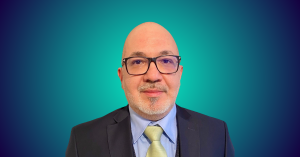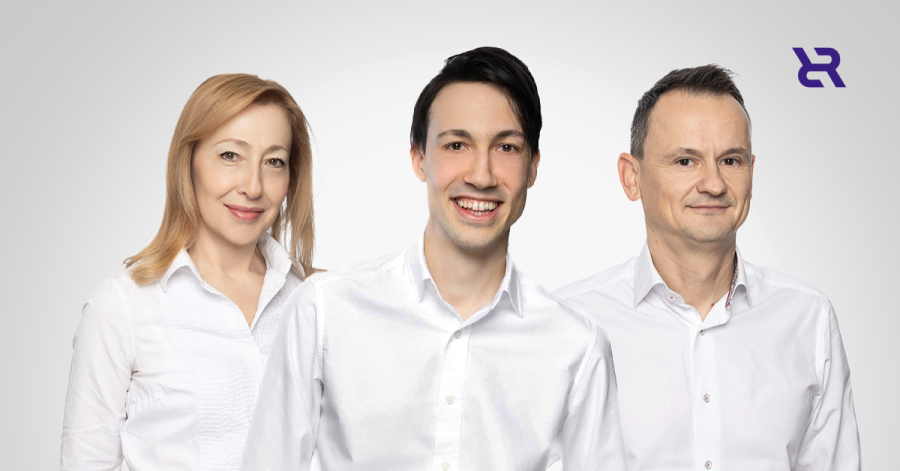


Flight compensation company SkyRefund operates at the intersection of law, data, and technology, addressing a structural gap in how air passenger rights are enforced globally in case of flight problems. Founded by Ivaylo Danailov, Kaloyan Todorov, and Maria Danailova, the company has grown into a multi-market legal-tech operation. The platform is supporting claims across jurisdictions where regulation exists, but enforcement often falls short. We spoke with CEO Ivaylo Danailov about building legal infrastructure in a highly regulated, cross-border industry.
- “Passengers have rights on paper, but they are not empowered to exercise them in practice.”
- “The passenger has to initiate the claim, but does not have access to the data required to prove it.”
- “We’re building the infrastructure that makes passenger rights enforceable at scale.”
Tell us about SkyRefund. How did the company come to be, and what motivated you to build it?
The idea for SkyRefund came quite naturally in 2016, when some friends of mine were having issues with an airline. They knew they should probably be entitled to compensation, but at the time passenger awareness was much lower than it is today, and to be honest, it still isn’t great today either. Back then, I had just graduated from law school in the UK, and I saw this as an opportunity to help not only them, but also many other people facing similar situations.
I prefer fast-paced environments, things that feel more current, more technology-driven. And when most people think about law, they still have a traditional image: big stone buildings, old rituals, people dressed in a certain way. That was always the association in my mind too, and I knew I wanted to find a way to do something in that space that felt more up-to-date, more in the 21st century.
From the start, we wanted to build a real brand, and structure it in a way that used technology to solve a legal problem at scale. Together with Kaloyan Todorov and Maria Danailova, also legal professionals, we founded the company in 2017. All three of us come from a strong legal background. We’re also still operationally involved to this day, which matters a lot in a business like this.
What gap did you see between what the regulations promise and what actually happens in practice?
The gap exists for a simple reason: passengers may have rights on paper, but they are not empowered to exercise them in practice.
The key limitation is that airlines are not required to proactively compensate passengers.
The airline knows why the flight was delayed, it has the operational data, your booking and, in many cases, your payment details. And yet the burden is still on the passenger to initiate the claim.
That creates a strange imbalance: the passenger has to initiate the claim, but does not have access to the data required to prove it.
That is why legal protection matters so much. Regulation 261 in Europe is a strong piece of legislation. It sets out passengers’ rights to compensation and assistance when flights are delayed, cancelled, or overbooked. Its value goes far beyond the fact that it is central to our business — it has had a genuinely positive impact on air travel overall. When you compare Europe to countries without a similar system, it is clear that it works. Flights covered by EC261 are up to 70% less likely to face delays of more than three hours than flights in the US, where no equivalent regulation exists. That is also why you see other countries adopting similar approaches.
SkyRefund is fundamentally a legal-tech company. What role does technology play in how you handle claims at scale?
Technology is essential. If you are dealing with compensation frameworks where the payout amounts are largely fixed by regulation, then the only way to make the model operationally viable is through scale, automation, and disciplined processes.
Our first role is to enrich the data that the customer gives us. Most passengers know little about what actually happened to their flight and the airline usually has that information, not the passenger. So what we have built is an internal software infrastructure that helps us reconstruct the factual and legal picture of a claim.
We use advanced automation to handle claims across airlines, and our software includes a sophisticated data module that aggregates and cross-checks information from official and real-time sources: airport status, live flight data, weather conditions, news coverage, and other relevant inputs. That allows us to build a much more accurate understanding of what actually happened.
This matters for two reasons. First, it helps the passenger. Second, it helps us structure claims more clearly and accurately for the airline. Our data allows us to understand what happened on a flight in much greater detail and to submit that information in a more complete and consistent way. That is beneficial for both sides: passengers get better-prepared claims, and airlines receive cases that are clearer, better supported, and easier to assess.
But technology doesn’t replace the human side. We also have a large team of claim experts who review and handle cases individually when needed. So the model is not about automating law out of existence.
What does it take to operate in a sector where every claim can involve legal action across borders?
This is where things become very complex, very quickly.
We are operating a technology-enabled process. But we are still working inside a legal environment that is highly regulated, fragmented, and often quite traditional. That creates a constant tension between two worlds.
Once a claim moves into enforcement, it enters national courts, local procedures, and country-specific legal systems. At that point, a fully centralized model no longer works. That’s why we work with a global network of legal experts that allows us to operate effectively across all the jurisdictions we serve.
We currently support passenger rights laws in the EU, including countries within the European Common Aviation Area, as well as the UK, Canada, Turkey, Saudi Arabia, and Brazil, and that requires a lot of coordination.
The complexity is not just legal. It is also procedural, operational, and organizational, too.
How does SkyRefund structure its network of legal partners, and how important are these partnerships for operating across multiple countries?
They are essential.
Finding the right legal partner is a lengthy process for us, because we need to make sure they are aligned not only on the legal side, but also on the operational side. They have to work with our tools, integrate into our systems, and approach claims in a tech-enabled way.
How did you fund SkyRefund in its early days, and what were the key milestones that allowed the company to grow to its current scale?
We bootstrapped the company from day one. We have never had an external investor.
By 2019, we had grown from a small founding team to around 10 to 12 people, and the business was developing well. During COVID, however, we had to downscale for a period of time and rethink how we operated.
But because we had always run the company in a grounded way, we were able to navigate that period without abandoning the project.
From 2022 onward, we made a major push. We strengthened the IT side, strengthened marketing, and scaled much more aggressively. Since then, growth has been strong. Today, we have helped more than 1.6 million passengers globally, and we continue to expand steadily by incorporating more regulations and entering more jurisdictions where the model becomes viable.
Today we have an international team of over 60 people and we are expanding.
How do you build trust in a category where passengers may initially be cautious about giving a third party control over their legal claims?
Trust is absolutely central in this business, and there are several layers to it.
The first challenge is education. Many passengers still do not know their air passenger rights — some surveys suggest that around 80% do not fully understand when they are entitled to compensation. That naturally creates scepticism. If someone paid €25 for a Ryanair ticket and then hears they may be entitled to €400, it can sound too good to be true. So trust starts with basic awareness.
That is why education on air passenger rights is a core part of our mission. We are active members of the Association of Passenger Rights Advocates, we collaborate with the European Consumer Centre, and we regularly speak publicly on air passenger rights topics through media appearances, conferences, and informative articles. A large part of our work is helping passengers understand what their rights actually are, regardless of whether they use our service.
The second layer is transparency. We are transparent about our fees and we never hide taxes. SkyRefund applies the same pricing policy to all passengers, regardless of nationality, with no extra fees added later in the process. We also cover bank transfer costs ourselves, so the amount communicated upfront is the amount the passenger can genuinely expect to receive. That is not always the case in this sector, where certain costs are not always clearly explained or included from the start.
The third layer is customer support. In travel, support matters a lot because people are usually already stressed when they come to you. They may be stranded, frustrated, or financially affected by a disruption. That is why our role is to respond as quickly as possible, show understanding, explain everything clearly, and take care of whatever is needed.
Which markets are you prioritizing next, and what determines whether a new country becomes viable for SkyRefund?
We closely monitor legal developments across many countries. Once a market has a clear enough framework on passenger compensation, we can assess it. Since eligibility often depends on where the journey starts, we have already helped travellers from hundreds of countries, and we continue to follow new passenger-rights frameworks in markets such as Australia. From there, we look at how to build reliable legal partnerships in the market, assess the level of passenger-rights awareness, and develop the right technology and operational setup to support it.