

Somewhere inside the customer service infrastructure of a major European telecom, or running beneath the onboarding pipeline of a bank, or loaded on the school device of every student in the Bulgarian public school system, there is a system that DSS built. The company’s name does not appear on the interface. It rarely does. That invisibility is an accurate description of what serious enterprise technology work looks like: load-bearing, trusted, and operating quietly at scale.
DSS (short for Digital and Software Solutions) is a Sofia-based IT consultancy and product company specialising in ServiceNow implementations (ServiceNow being the enterprise platform that large organisations use to coordinate workflows, automate processes, and manage internal operations) digital transformation, and identity verification technology. Several of their projects have touched hundreds of thousands of users. Some of the government systems they have contributed to serve millions.
The company started with one person and one contract.
The first client was BP
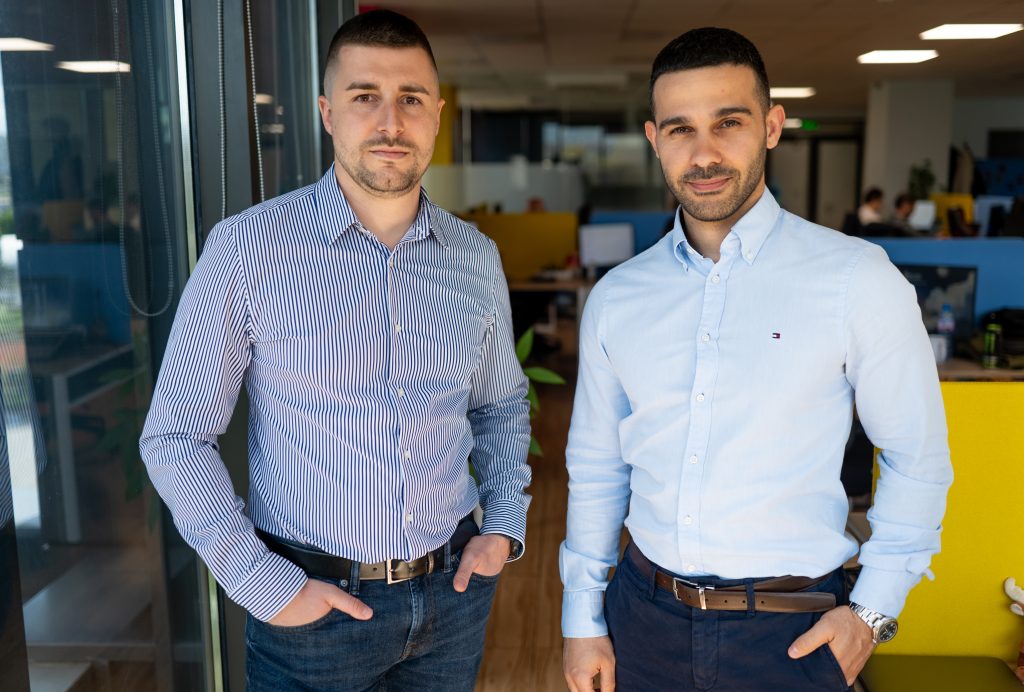
The founder Plamen Nakov launched DSS as a single ServiceNow consultant. His first engagement was with one of the world’s largest oil and gas companies – British Petroleum (BP). Building a reputation inside an organisation that size, without institutional weight or brand recognition behind you, requires a particular discipline. It also requires a clear answer to a question most IT companies never ask themselves.
“Enterprise clients don’t need another vendor,” the founder says. “They need a partner who can think with them, not just execute for them. DSS was never going to win on headcount or brand recognition, so we built our identity around flexibility and tailored solutions. We move fast, we adapt, and decision-makers can actually reach us directly. That’s rare in this industry.”
The distinction between partner and vendor is easy to claim. It is harder to sustain across engagements with organisations as different as an oil major, a European bank, and a national government ministry. What makes it credible at DSS is partly the consistency of delivery, and partly the mechanism that delivery creates: referrals. Word of mouth is the company’s primary pipeline. That means every engagement is also a reputation asset, and the discipline required to protect it shapes how DSS operates at every level.
The telecom that copy-pasted itself
The clearest illustration of what thinking with a client actually means came during a recent engagement with a major European telecom and system integrator. The client had run thorough internal workshops, gathered requirements across all relevant departments, and produced a detailed scope document for a ServiceNow CSM deployment. CSM, or Customer Service Management, is the platform layer that routes customer interactions, manages cases, and coordinates service teams.
When DSS reviewed the scope, they found a problem that no amount of workshop thoroughness had surfaced.
“The entire approach was a digital copy-paste of their existing processes,” Nakov explains. “No optimisation, no rethinking, just the same workflows moved into a new system. In the context of ServiceNow today, where AI capabilities are deeply embedded into the platform, that was a significant missed opportunity.”
DSS stepped in and reframed the conversation. The question they brought back to the client was specific: what if this implementation actually reduced manual effort, and let AI handle a significant portion of customer requests? The scope changed. The value delivered at go-live was materially different from what the original brief would have produced.
This moment – arriving at a well-documented plan and asking what its assumptions are actually optimising for – is what DSS means when they describe seeing what the client cannot yet see, a function of technical depth, yes. It also requires the willingness to have an uncomfortable conversation early enough to matter.
The client this does not work for
That same willingness means DSS is clear about when an engagement is unlikely to produce real value and willing to say so before the contract is signed.
“The single thing we look for is a genuine willingness to adapt,” the founder says. “Not just openness to new tools, but openness to rethinking how things are done.”
The Bulgarian Ministry of Education is an example of an institution that has demonstrated that willingness in practice. DSS has delivered two significant projects for the Ministry: an e-learning platform built during the COVID-19 pandemic, when Bulgarian schools needed remote instruction infrastructure at speed, and an integrated software system now in active use across the full national curriculum, from first to twelfth grade.
Every student in the Bulgarian public school system works within the second of those. Educational systems are designed to be conservative in their content, the founder notes, and appropriately so. How that content reaches a generation raised on smartphones and constant digital stimulation is a different question entirely, and one the Ministry has engaged with seriously.
On the other side of that line are organisations that arrive at a consultancy engagement with a conclusion already in place.
“Where we’re not the right fit? Organisations that are looking for a vendor to validate a decision they’ve already made. Or those who treat technology as a box to check rather than a lever for real change. That kind of engagement doesn’t produce value for anyone, and we’d rather say so early.”
A disqualifier stated this plainly is itself a form of positioning. It signals, precisely and in advance, what kind of conversation clients are walking into.

The product that took five years
In 2019, DSS delivered a document processing project for a bank. The brief required digitising hundreds of thousands of paper identification documents: low-quality scanned images, with noise, overlaid signatures, mixed content. The system had to locate the document within the image, crop it, run optical character recognition, extract and validate the data, and feed it into a downstream processing pipeline. With the technology available at the time, this was genuinely hard. They delivered it.
That project quietly became the foundation of aIDentix, DSS’s proprietary KYC and AML solution. KYC, Know Your Customer, and AML, Anti-Money Laundering, are the regulatory compliance processes that financial institutions, fintechs, and telecoms are required to run when onboarding new users. Extracting and validating identity data from a document is the first step in any KYC workflow. DSS had built that capability years before they had a product name for it.
aIDentix launched as a standalone offering in 2024. The founder does not soften the timeline.
“We delivered the original project in 2019 and only committed to building aIDentix as a standalone product in 2024. That’s a gap we learned from. The core technology is strong. The focus now is on speed to market and positioning it where it belongs: in the hands of fintechs, banks, and telecoms who need a serious, compliant, flexible identity solution.”
Five years between a working technical capability and a market-ready product is an unusual rhythm in an industry that rewards speed above most other things. It is also consistent with how DSS operates: the same honesty they apply to client briefs, applied to themselves.
What Eastern Europe built
Bulgaria has over two decades of sustained investment in technical and computer science education, producing one of the strongest software development markets in Europe. That foundation is increasingly recognised in Western European procurement decisions, though the pace of recognition has been uneven.
The founder argues that the more significant factor is something harder to programme.
“Because of where Eastern Europe sits historically and politically, our development trajectory was different from the West’s. That created a perception, still lingering in some quarters, that the East is behind, less capable, less sophisticated. We know that’s wrong. Every Eastern European professional knows that.”
The gap between that perception and the actual technical capability it underestimates has become, for DSS and for others building out of the region, a driver rather than a constraint.
“We don’t have the luxury of complacency. We work harder to prove ourselves, and we bring an intensity and hunger to technical problem-solving that is genuinely difficult to manufacture in markets where success has been assumed for decades.”
He closes the thought simply.
“That’s not a disadvantage. That’s an edge.”