

For Bulgaria’s technology ecosystem, 2025 marks a year of concrete progress and global relevance, with companies such as EnduroSat securing $104 million to industrialise satellite manufacturing, Evrotrust joining the EU’s Digital Identity Wallet consortium; and INSAIT being ranked among Europe’s top computer science research institutes – all signals of an innovation sector increasingly influential across the continent.
Just as importantly, the evolution of Bulgaria’s tech sector in 2025 has not been limited to products and capital, but has also become visible in the environments where companies choose to operate. High-quality office space, modern coworking infrastructure, and premium work environments have emerged as critical indicators of ecosystem maturity. Global companies do not scale serious teams, nor do investors commit long-term capital, in markets that cannot physically host them.
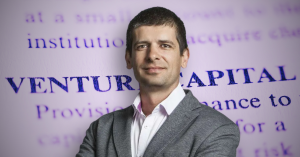
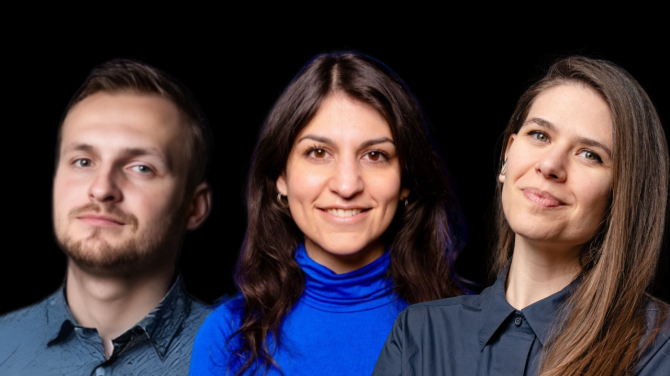
To reflect on what genuinely moved the needle in the past year and what these shifts signal for the year ahead, we turned to two perspectives that sit at the heart of the local ecosystem: our own CEO Teodor Antonio Georgiev, who observes the ecosystem from inside, working with founders, capital, and institutions across Central and Eastern Europe, and Tony Aleksandrov, CEO of WorkBetter, who literally creates the physical environments where this growth materialises and increasingly defines how companies operate in Bulgaria.
Together, they offer personal insights and experiences from their work as founders in 2025 and outlining the trends they expect to shape Bulgaria’s tech ecosystem in 2026.
Signals of Growth
From a macro perspective, 2025 was defined less by isolated wins and more by a shift in collectiveness — a sense that the ecosystem had begun to operate with greater confidence and coherence. Rather than relying on a small number of standout success stories, Bulgaria’s tech sector continues to show signs of systemic progress.
From your perspective, what were the three most significant tech or ecosystem moments in 2025 that genuinely moved Bulgaria forward?
Teodor Georgiev:
In 2025, Bulgaria clearly reaffirmed its role as a regional tech leader, with EnduroSat standing out as the single most powerful signal, closing two funding rounds in one year and articulating a globally ambitious vision: reducing the cost of satellite data to $1 per gigabyte. That ambition alone repositioned Bulgaria in the global space-tech conversation.
Beyond individual wins, what truly moved the needle was the visible maturation of the ecosystem itself—founders scaling faster, investors acting with more confidence, and institutions coordinating better. The narrative shifted from “emerging potential” to “proven capability,” which is a critical psychological and strategic leap.
This transition is not only visible in funding rounds and international attention, but also in the environments where companies choose to build.
The Role of Office Spaces
Over the past decade, Bulgaria’s definition of “going to the office” has changed drastically. Coworking environments have moved from fringe solutions to central infrastructure, mirroring broader changes in how innovation-driven teams operate. In mature ecosystems, office space is rarely neutral: it reflects confidence, time horizons, and expectations around talent, culture, and growth.
Bulgaria went from fewer than 20 coworking spaces a decade ago to around 90 today. What do you think drove this change?
Tony Aleksandrov:
Over the past decade, Bulgaria has consistently established itself as a strong hub for talent in technology, creative industries, and professional services. Combined with competitive operating costs, a growing entrepreneurial ecosystem, and the global shift toward flexible and hybrid work models, this has created strong demand for modern, collaborative work environments. As a result, coworking spaces naturally became central to how innovative teams operate across the country.
I also believe that WorkBetter has been one of the key catalysts for the development of the local coworking and flex-space market. When we entered the market in 2022, the concept was still relatively unfamiliar, and a significant part of our effort went into educating the market. That investment took time, but it paid off.
Since then, WorkBetter has helped define a new standard by consistently delivering a premium coworking experience and continuously evolving our spaces, services, and community. We’ve grown alongside our members, supporting both Bulgarian and international companies as their needs evolve.
As the ecosystem matured, so did expectations, particularly among international founders and investors assessing Bulgaria as a long-term base.
While cost efficiency remains relevant, it is no longer sufficient on its own. For globally minded teams, physical infrastructure and work environments increasingly shape decisions around location, talent retention, and organisational culture.
When international founders or investors evaluate Bulgaria as a place to build or invest, how much weight do they give to physical infrastructure and work environments?
Teodor Georgiev:
Physical infrastructure and work environments matter enormously, especially as decision-makers increasingly link productivity, talent retention, and culture to space quality. Many international founders and investors visit Bulgaria around events like Digitalk or Crossroads, where we regularly host side events with partners such as WorkBetter. The reaction is consistently positive—people are genuinely surprised by the level of maturity, design, and professionalism of local workspaces. These environments help dismantle outdated stereotypes and send a strong signal that Bulgaria is not only cost-efficient, but also ready to host serious, globally minded teams.
This shift toward quality is perhaps most visible inside the office culture and coworking environments themselves.
We often talk about a move from “cost” to “quality and experience”. What does that mean in practice inside a coworking space today? What should feel fundamentally different compared to five years ago?
Tony Aleksandrov:
The shift from “cost” to “quality and experience” is central to everything we do. While our pricing is the highest in the Bulgarian market, our offering is also the most complete, distinctive, and premium. The fact that since our opening we are always operating our spaces with 90–100% occupancy is a strong signal that costs are no longer so important, but BETTER service is! We continuously refine existing services and introduce new ones to meet the evolving needs of our members.
Unlike the sterile environments typical of traditional office buildings, our spaces are designed with hospitality, comfort, and inspiration in mind, places where people genuinely enjoy spending their day. Thoughtful interior design, ergonomic furniture, abundant natural light, flexible work zones, modern A/V technology, and automated processes make work feel seamless. Amenities such as a bar, bistro, gym, and dedicated community support further elevate the experience through personalized service and attention to detail.
Another major shift is location and building quality. In the past, many coworking spaces were located in older buildings, former factories, or less prestigious offices in order to secure lower rents. That model has changed significantly — both globally and in Bulgaria. WorkBetter was the first coworking operator in Bulgaria to open in an ultra-modern Class A office building. Today, all three of our locations are in brand-new buildings, offering modern HVAC and ventilation systems, renewable energy solutions, LEED certification, electric vehicle charging, green outdoor spaces, and access to a wide range of amenities. These elements are now an essential part of the coworking experience.
Who Is Driving Demand
As coworking becomes core infrastructure rather than an alternative, the profile of demand has shifted accordingly. Who occupies these spaces offers a clear signal of where the ecosystem truly stands.
From what you’re seeing daily, who is driving the next wave of workspace demand — startups, scaleups, hybrid corporate teams, or international operators entering Bulgaria?
Tony Aleksandrov:
The next wave of coworking demand in Bulgaria is clearly being driven by SMEs and corporate teams. While coworking initially emerged as an office solution for freelancers and startups, that is no longer the case. WorkBetter is a strong example of this shift. Today, approximately 70% of our clients are international corporations, including companies such as Infosys, Dell, Booking.com, Mott MacDonald, Man Group, Exadel, LivePerson, LiveScore, WP Engine, Fastmarkets, and many others.
I often say that I don’t view other coworking operators as direct competitors. The Bulgarian market has room for operators focused on freelancers, others focused on local startups—and then there is WorkBetter. Our focus is on serving SMEs and corporate clients, which means that in practice, we are competing primarily with traditional office leases, not with other coworking spaces.
Visibility Beyond Borders
Throughout 2025, international exposure continued to amplify Bulgaria’s tech narrative. Visibility, in this context, acts as a multiplier: it accelerates reputation, compresses trust-building cycles, and reinforces investor confidence.
Thanks to the #BreakingGrounds initiative, Bulgarian tech companies gained sustained international exposure across major global platforms.
Reflecting on your participation at Web Summit this year, what impact do you think this kind of international exposure has for WorkBetter? How does it influence partnerships, credibility, or the way you position Sofia and Bulgaria more broadly?
Tony Aleksandrov:
I’m very grateful to our partners at The Recursive, because together we were able to clearly demonstrate that Bulgaria is an attractive destination for international businesses. Factors such as cost efficiency, a favorable tax system, and — most importantly — the quality of local talent and mindset resonated strongly with global audiences. As these companies consider establishing or expanding operations in Bulgaria, WorkBetter is positioned as a trusted partner in that journey. Our spaces have become key collaboration hubs within Sofia’s IT and business ecosystem, and increasingly, within Bulgaria as a whole. International exposure like Web Summit not only strengthens our credibility and partnerships, but also helps position Sofia and Bulgaria as forward-thinking, competitive destinations for global business.
Looking Ahead to 2026
As the ecosystem closes a year of consolidation and progress, attention naturally turns to what comes next.
Looking ahead to 2026, which tech events, ecosystem initiatives, or development pathways are you most excited to see emerge? Where can The Recursive help shape that momentum?
Teodor Georgiev:
2026 looks exceptionally promising, especially because — for the first time — our entire event and ecosystem program at The Recursive is planned a full year in advance. That operational maturity allows us to move faster and with more precision, connecting founders, investors, and corporates in highly targeted ways rather than through generic exposure. I’m excited about our ability to act as infrastructure, not just media – creating real meetings, real conversations, and real outcomes. We’re also preparing a new information and distribution channel that will make the ecosystem more transparent and accessible to a wider international audience. By September 2026, I expect both The Recursive and the broader CEE ecosystem to be operating in a completely new era of visibility and coordination.