

The results of the US elections and the ongoing conflict in Ukraine have fundamentally redrawn Europe’s investment map. Defense technologies, which were on the fringes of interest just a few years ago, have become one of the fastest-growing segments. Their share of the European VC market has jumped to 6.2%, and billions of euros are now flowing into the sector. Funds are on the lookout for autonomous drones, AI for sensor fusion, and cybersecurity for critical infrastructure.
However, in our legal practice, we see that technological dominance is no longer enough to guarantee success. Geopolitics and the push for European autonomy have brought about a new reality: in the defense and dual-use sectors, law and compliance have become just as important as the product itself. It is precisely in this intersection that the opportunity for success emerges, provided, of course, that both founders and investors understand the rules.
Regulation as a key driver of valuation
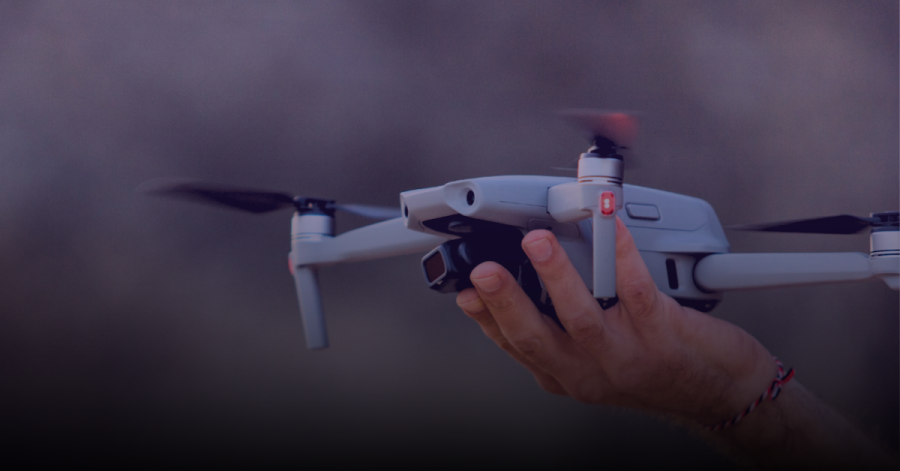
Today, the law can make or break a startup before its product even hits the market. A typical example is a cutting-edge reconnaissance drone that attracts interest from both the military and the commercial sector. However, upon landing its first foreign contract, the startup often hits a wall: the technology falls under European dual-use regulations, and without an export license, it cannot be legally exported even to a NATO member state.
If an investor discovers during due diligence that the company lacks a solid compliance structure, fundraising halts, and the project suffers months of delays. In defense tech today, compliance dictates valuation almost as much as the product itself. A startup that has absolute clarity on its intellectual property, export classification, and security protocols from day one dramatically reduces regulatory risk for investors. Legal readiness thus becomes an investable asset in its own right.
Moreover, this pressure has intensified this year. European export control rules now encompass sensitive areas like quantum technologies and advanced microchips. NIS2 is raising mandatory cybersecurity standards, and the upcoming Cyber Resilience Act will require „security by design“ built directly into products starting in 2027. While the AI Act exempts military systems, its rules fully apply to the civilian spin-offs of dual-use technologies.
A new investment lens
European defense technologies are experiencing an unprecedented turnaround. The number of specialized defense funds has grown from eight to more than fifteen in just three years. The NATO Innovation Fund manages a billion euros, and players like Presto Tech Horizons and OTB Ventures are actively scouting for deep tech projects. Players like DEPO Ventures are also entering this space, bridging the gap between regional talent and capital.
However, it is precisely here that the gap between technical vision and business reality often reveals itself, as confirmed by Petr Šíma, General Partner at the investment group DEPO Ventures:
„When we first meet founders, they often don’t yet know whether their technology falls under a strictly defense or a dual-use regime. Yet this fundamentally impacts exports, certifications, and their entire strategy. In the CEE region, we repeatedly see that technically strong teams have developed their product further than their company.“
„Therefore, our role is not just to provide capital, but to help set up a scalable structure from the outset, one that is ready for both military and commercial procurement processes.“
Where are the biggest mistakes made?
In my experience, the greatest risks lie in the details that founders overlook in the early stages. We frequently encounter startups with great technology and promising pilot projects. But then an investor steps in, launches due diligence, and it turns out that:
- A grant agreement or a military contract disproportionately restricts future commercial use.
- The ownership of an algorithm is unclear because it was developed in collaboration with a university without proper IP agreements.
- The company lacks a resolved end-user control process, making legal sales outside a narrow circle of partners impossible.
These issues can be resolved, but discovering them late costs time, money, and often the investor’s trust. Getting compliance right from day one is ultimately cheaper and faster.
Capital, law, and technology: The new triangle of success
For defense startups, a new triangle has emerged – capital, law, and innovation. None of these sides can pull the weight alone. An investor ignorant of compliance risks pouring money into a project that will get stuck at export. A lawyer without business acumen will draft perfect documentation that ultimately stifles the startup’s growth. And a founder without either will be left with brilliant technology that never reaches a customer.
According to Petr Šíma, this synergistic approach is crucial for all of Europe: „Europe has a chance to build its own champions. It has the talent and the political will. But we will only succeed if investors, lawyers, and founders start collaborating from the very beginning. Because in defense tech, the game isn’t just about valuations; it’s about strategic security, which demands more than just smart algorithms. It demands smartly built companies.“