

On May 20–21, Berlin will host Deep Tech Momentum 2026 (DTM26), an event built around one of Europe’s most persistent challenges: not building deep tech, but getting it to market.
Across sectors such as AI, energy, space, defence, computing, advanced materials, manufacturing, and robotics, Europe consistently produces technically strong startups. The bottleneck comes later. Many of these companies reach a working product, but struggle to move into real-world deployment — securing pilots, entering procurement processes, and converting interest into paid contracts.
This is the gap Deep Tech Momentum is designed to address.
From working technology to real deployment
In practice, adoption means something very specific. It is the transition from a validated technology to actual use inside large organizations.
For startups, that process is rarely straightforward. Selling into enterprises often involves long procurement cycles, unclear budget ownership, and multiple layers of approval. Even when there is interest, moving from conversation to contract can take months or longer.
For corporates, the problem looks different but leads to the same outcome. Large organizations are actively searching for new technologies, but struggle to identify solutions that are not only innovative, but also reliable, compliant, and ready to integrate into existing systems.
DTM positions itself directly between these two realities. The event is structured to connect startups not with general “innovation teams,” but with decision-makers who control budgets and can move forward with pilots and procurement.
A marketplace for pilots, not just exposure
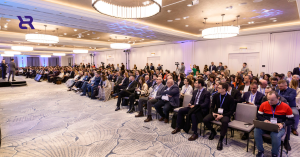
The format reflects that focus. More than 3,000 participants are expected, including corporate leaders from companies such as IBM, Airbus, Siemens, Bosch, BMW Group, and SAP, alongside venture firms, corporate VCs, and family offices.
What differentiates DTM from broader startup conferences is the emphasis on execution. The event is designed to compress months of business development into two days of structured interactions — from curated matchmaking to closed-door roundtables and investor-founder meetings.
The objective is not visibility alone, but progress. For startups, that means pilots and contracts. For corporates, it means identifying solutions that can be deployed within real operational constraints.
Previous editions suggest that this approach resonates. Organizers report over €500M in facilitated investments, more than 500 partnerships and pilots initiated, and hundreds of corporate buyers participating.
Speakers reflect the operators behind Europe’s deep tech ecosystem
The speaker lineup brings together founders, operators, investors, and policymakers involved in moving deep tech into real-world deployment. Among the founders are Markus Pflitsch of Terra Quantum, Tom Plümmer of Wingcopter, Toby Cubitt of Phasecraft, Alexander Glätzle of planqc, Simon Thomas of Paragraf, Philippe Notton of SiPearl, Ricardo Mendes of TEKEVER, Jan Oberhauser of n8n, and Dr. Lilian Schwich of cylib, spanning quantum computing, aerospace, semiconductors, automation, defence, and battery recycling.
They are joined by corporate leaders responsible for adopting these technologies inside large organisations, including Dr. Kristina Wagner of OHB, Axel Deniz of Bosch Business Innovations, Dr. Andreas Nauerz of IONOS, and Mallikarjuna Rao of Telefónica, alongside defence and industrial operators such as Thomas Gottschild of MBDA Germany, Sven T. Heursch of HENSOLDT, and Michelangelo Masini of ZEISS Group. The capital and ecosystem layer is represented by investors such as David Cohen of Techstars, Hendrik Brandis of Earlybird, Michael Sidler of redalpine, and Thomas Oehl of VSQUARED, as well as institutional voices including Roberto Viola of the European Commission, Walther Pelzer of the German Aerospace Center, and Verena Pausder of Startup-Verband.
DTM100: early-stage startups compete for access
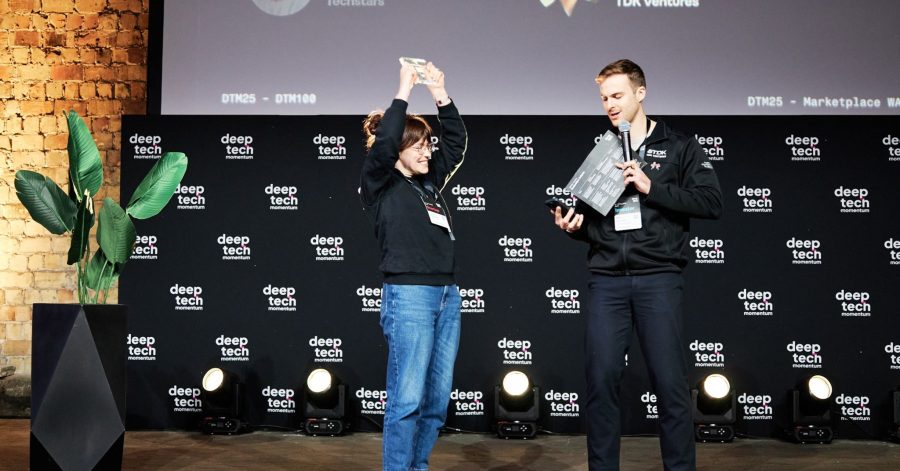
At the center of the startup track is the DTM100 pitch competition, now open for applications.
The competition targets EU and UK startups that have raised under €5M and operate across AI, energy, defence, space, computing, advanced materials, manufacturing, and robotics. These are sectors where technical development cycles are long, and early commercial traction is often the hardest milestone to reach.
Selected companies will pitch live in Berlin in front of investors and corporate leaders from firms including Earlybird, HV Capital, Lakestar, NATO Innovation Fund, redalpine, HTGF, Elaia, Bosch Ventures, BMW i Ventures, Samsung Next, and Porsche Ventures.
Beyond the pitch itself, the structure of the competition reflects the broader logic of the event. Startups gain direct access to corporate buyers with active budgets, as well as investors looking for technically mature companies with clear paths to deployment. Those selected for the DTM Watchlist receive additional visibility across a network reaching more than 250,000 subscribers and tens of thousands of ecosystem stakeholders.
Applications are currently open, with early submissions increasing the chances of selection.
A shift in how Europe builds its deep tech ecosystem
DTM reflects a broader shift in Europe’s approach to innovation.
Over the past decade, much of the ecosystem has focused on funding and visibility — helping startups raise capital and gain exposure. While those elements remain important, the next phase is increasingly defined by execution: whether technologies are adopted, integrated, and scaled in real-world environments.
This is particularly critical in sectors such as energy, defence, and advanced manufacturing, where deployment is tied not only to commercial outcomes, but also to strategic autonomy and industrial resilience.
Events like Deep Tech Momentum signal a move toward more transaction-oriented formats — where the value is measured less in audience size and more in outcomes such as pilots, partnerships, and procurement decisions.