

In 2026 again, Money Motion has become the gathering point for over 900 companies and 5,000 professionals from 20+ countries. Biggest regional fintech conference in Zagreb peaked our curiousity with three segments especially: discussions on ETFs and wealth management, the future of banking, and innovation in (e)commerce.
Taken together, they told one story: the technology exists, the consumers are ready, but the bottleneck usually sits either with the institutions or the companies themselves. From ETF infrastructure to invisible payments to the long-term survival of retail banking, speakers moved past conference optimism to name specific challenges and propose fixes.
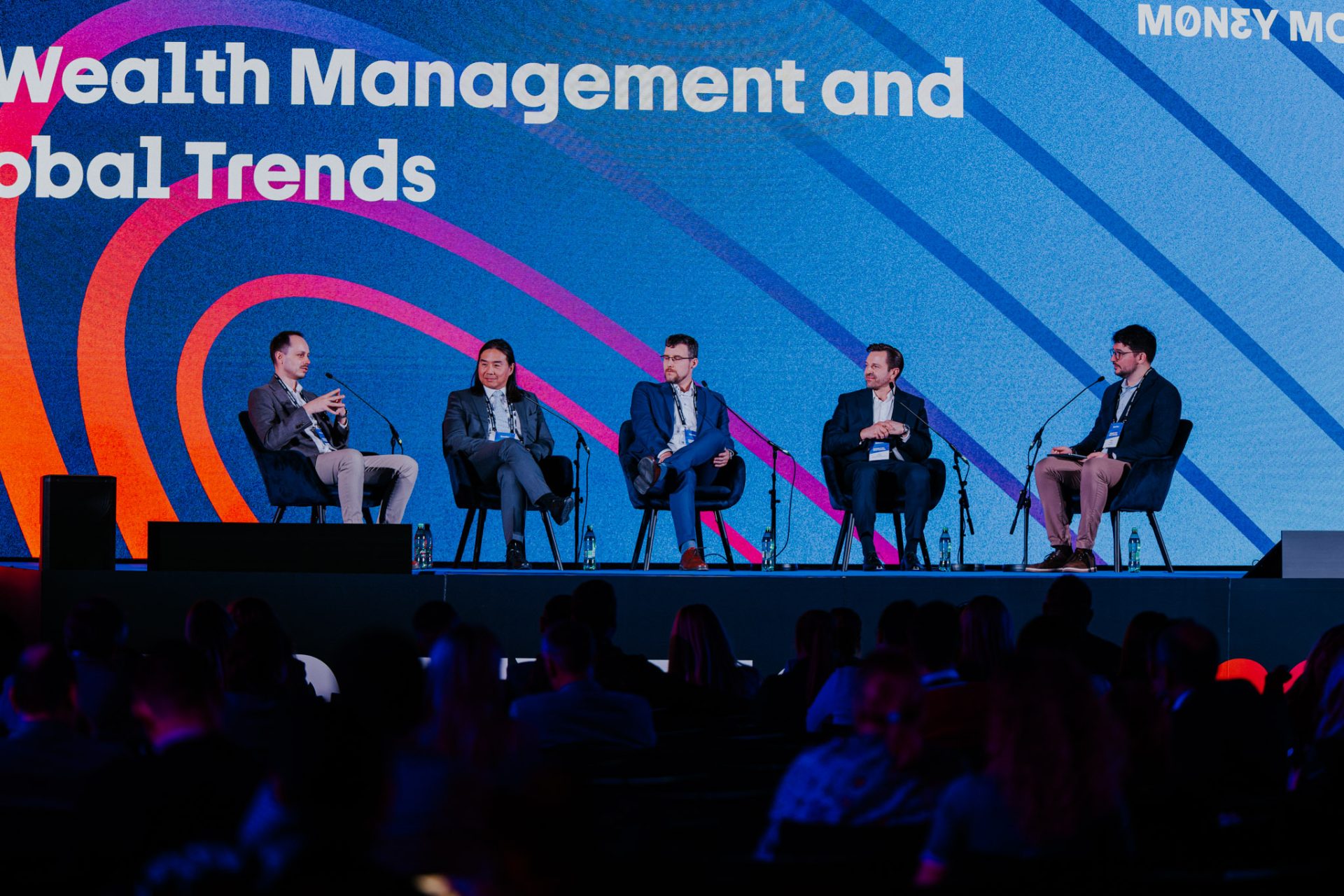
The panel Future of Wealth Management and ETFs in Global Trends, moderated by Đivo Pulitika, (InterCapital ETF); featured Ivan Đurđević (JPMorgan Asset Management), Henry Jim (Bloomberg), Bálint Fischer (Dorsum), and Krešimir Vugrinčić (InterCapital). They flagged a concurrent shift in European investor appetite: growing awareness of concentration risk in US tech stocks is pushing capital toward infrastructure, green transition, and defense themes.
Fischer, Business Development Director at Dorsum, cited research showing that 69% of institutional investors prefer to direct capital toward firms that offer advanced digital investment platforms, and that 80% of clients now expect a personalized digital experience as standard. More than half, Fischer noted, would consider switching providers if that expectation goes unmet. We can all agree: digital infrastructure is no longer a differentiator for success, but failure. If you are not enabling it, you are out.
Fischer also positioned ETFs not as products but as building blocks. “ETFs are increasingly becoming part of the core infrastructure of modern investment portfolios, not just individual investment products,” he said. “Fintech platforms treat them as modular elements for model portfolios, discretionary mandates and automated advisory services.”
Tokens, data, and the checkout gap
The commerce panel, Innovation in Action – Powering the Next Wave of Commerce, produced the session’s sharpest moment of self-criticism. Zorana Milidrag, Global eCommerce Director at Foot Locker SEE, rejected the long-standing narrative that Southeast European consumers are not ready for digital payments. “If my mother is paying online for the last year and buying everything on Temu,” she said, “obviously we were ready, but we didn’t give the motive.” She pointed to Temu’s market penetration (roughly 50% of orders in Serbia paid fully online) as proof that the region’s merchants, not its consumers, had been the obstacle all along.

Niccolò Lania, Group eCom Product Marketing Lead at Nexi Group, framed the technology response around tokenization. Working with Mastercard, Nexi is rolling out token-based payment schemes across the region, replacing the 16-digit card number with a persistent identification code. “By the end of 2030 the 16-digit card numbers will die, and we will talk only on tokens,” Lania annonced. Tokens enable invisible payments, subscription flows, and agentic commerce — scenarios where an AI agent completes a transaction without the user lifting a finger. Lania described these as “seeds,” not finished products: the infrastructure is being laid now for use cases that will arrive mid-decade.
Milidrag grounded the conversation in a situation her own team had surfaced the previous week: Foot Locker was losing roughly 40% of customers between adding an item to the cart and completing a purchase. The two biggest drop-off points were the sign-in versus guest-checkout decision, and the payment method screen. “What would you tell your brick and mortar manager of the shop if he lost 20 or 30% of the people who brought their shoes to the cashier and then disappeared?” she asked. The root cause, she argued, is dirty data: retailers sit on vast customer datasets that are uncategorized and unusable, which means personalization and one-click checkout remain out of reach.
The advice to merchants was structural: clean the data first, then slim down the platform architecture so it can accept new integrations and run tests quickly. “Be ready for the innovation,” she concluded. “Your architecture needs to be ready for everything new coming up.”
What banks are actually for

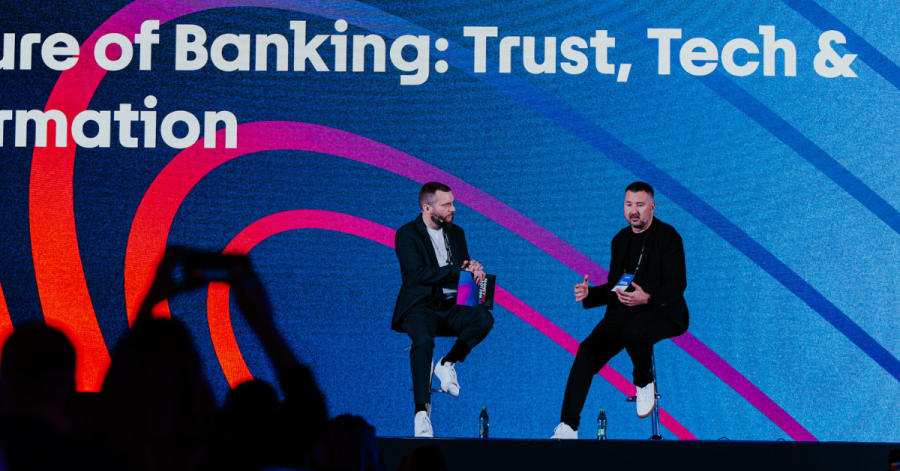
The fireside chat The Future of Banking: Trust, Tech & Transformation between Josip Majher, COO of Croatian Postal Bank, and Nikola Škorić, CEO of Electrocoin, ran as a genuine debate. Majher opened with a reframe that shaped the rest of the conversation: “The biggest mistake that we bankers do is calling what we do products. It’s not about products, it’s about your needs. Nobody likes a loan, but you want a home, or a car, or to travel.” Banking, in his framing, succeeds when it disappears: when it fulfills a need without demanding attention.
Škorić pressed on the threat from fintechs and hyperscalers. Majher acknowledged the competitive pressure: Alipay, he noted, grew from zero to 500 million customers in a single month, a number no European bank or fintech coalition could match, but he drew a line at complexity… Fintechs dominate payments; they do not do mortgages, defaults, or the 30-year relationship that follows. He landed the point with one question: “You know what every fintech wants to be when they grow up?” he said. “A bank.”
On agentic AI, he was pragmatic: Majher believes hybrid models will dominate, and human branches will still matter for major financial decisions for the foreseeable future. The need, he kept insisting, does not change, only the rails that serve it do.