

We often choose markets carefully after months of analysis and forecasting, but sometimes, a market chooses us.
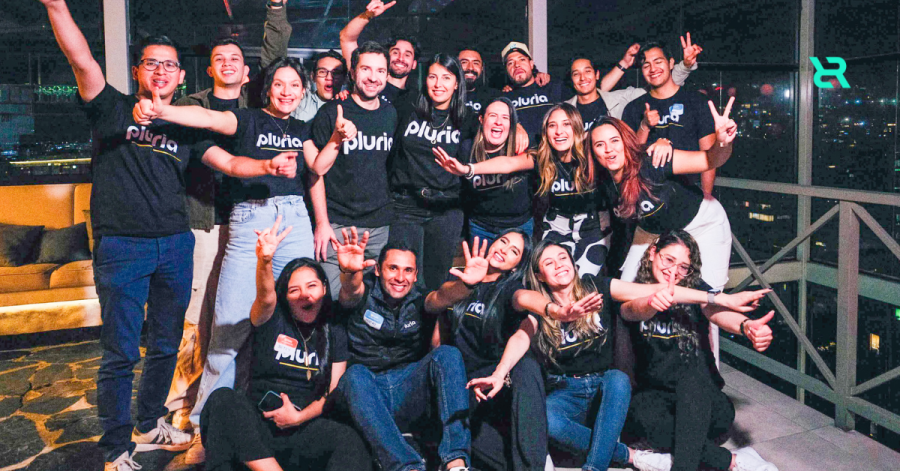
At Pluria, we never placed Latin America on a whiteboard as part of a long-term expansion plan. Instead, the region became our primary market because we saw the reality of hybrid work showing itself there earlier, more clearly, and with more transparency than elsewhere. Today, our strongest growth comes from Latin America, with Colombia, Mexico, and Argentina at the core of our operations. In 2025 alone, we grew 2.5 times compared to the previous year. We achieved this because we aligned our product with the way teams actually work.
Building for flexibility as a rule
We started with a simple premise: the office is a coordination tool rather than just a physical place. We realized that teams need moments of alignment, collaboration, and structure across different workspaces instead of being tied to a single address five days a week.
This idea existed well before hybrid work became mainstream. Initially, like many European startups, we assumed Europe would be our natural testing ground. After all, flexible work policies and coworking spaces were already part of the conversation there. However, we found our most honest validation in places where friction was already high and workarounds were part of everyday life, rather than in mature markets with established habits.
Our opportunistic start in Colombia
Our entry into Colombia resulted from a local contact and a simple decision to try, bypassing the usual market sizing exercises or expansion frameworks. The results surprised us. Adoption was fast, usage was intuitive, and teams needed very little explanation from us. Flexible access to multiple spaces already made sense to them.
In large Colombian cities, long commutes and dispersed teams make a single, stable office impractical. Consequently, we see coworking spaces and flexible offices used by startups, small teams, and corporate employees as a normal way of working, often while companies are still finalizing their internal policies. For these teams, experimenting with new tools is a standard part of how work happens. We felt immediately relevant because we formalized an existing behavior in a market that is open to trying solutions immediately.
Taking flight after the pandemic
While we were born during the pandemic, our real growth began after it. We noticed that the companies adapting fastest to the new landscape were those already operating with distributed teams across multiple countries. These teams needed to be present locally, close to clients and operations, without being locked into one physical headquarters.
We were already operating in environments where flexibility was a practical necessity. Our teams coordinated in smaller groups, used multiple spaces across cities, and met in person only when collaboration truly required it. After restrictions lifted, our clients maintained this structure because the cost and rigidity of a single-office model no longer made sense. They kept the setup that allowed them to stay local, distributed, and coordinated at the same time.
Insights from our collaboration data
In 2025, we shifted our focus toward understanding exactly how collaboration happens. Our Pluria aggregated data shows that collaboration remains central even as teams move away from working in a single place.
On average, teams used 6 different workspaces across 3 cities every month, while our users overall worked from 63 cities in a single month. Even as work spreads geographically, people still come together on purpose; 82% of workdays on our platform are collaborative, involving two or more colleagues working together.
Most of this collaboration happens in open, flexible environments. We found that 64% of workdays took place in open spaces, compared to 36% in meeting rooms, with coworking spaces hosting most interactions. We now see the office as a tool that teams activate when they need coordination and alignment, rather than a default destination.
Latin America as our global connector
As we grew in the region, we realized that Latin America acts as a key connector in global work. Many of our clients are companies based in the U.S. or Europe with distributed teams across Latin America. Through Pluria, we help them solve the challenge of coordinating across time zones, cultures, and locations.
In this context, we see flexible workspaces becoming anchors for global teams operating across borders. More than half of U.S. companies now plan to expand hiring in Latin America through 2026, with over 45% of employers specifically looking to increase recruitment in the region in 2025. This signals that distributed teams spanning the U.S. and Latin America are becoming a mainstream workforce strategy. Countries like Mexico, Colombia, Brazil, and Argentina are attractive because they offer strong technical talent and close time-zone alignment with the U.S., making real-time collaboration practical.
Our commitment to the future
To show how important Latin America has become for us at Pluria, I just moved with my family to Costa Rica to be closer to the market and support its growth. This decision reflects our strategy better than any document; this is where our product is being challenged, shaped, and validated every day.
Our growth in Latin America is a story of testing, taking risks, and paying close attention to usage habits. We believe the future of hybrid work takes form when teams adapt to real constraints, try things in practice, and keep what actually works. This process moves faster in environments where work is flexible by necessity.
Patterns often surface earlier outside traditional centers. Markets like Colombia, Mexico, or Argentina take risks and adjust along the way rather than waiting for trends to be fully validated. Latin America became central to Pluria because it is where our product made sense first. Increasingly, this is where signals about the future of work appear before they turn into strategy decks or headlines.