
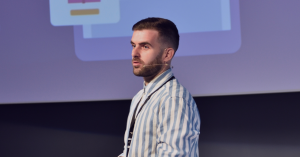
What started as a small entrepreneurship competition with a few dozen founders in the room has grown into one of Europe’s most internationally connected tech gatherings.
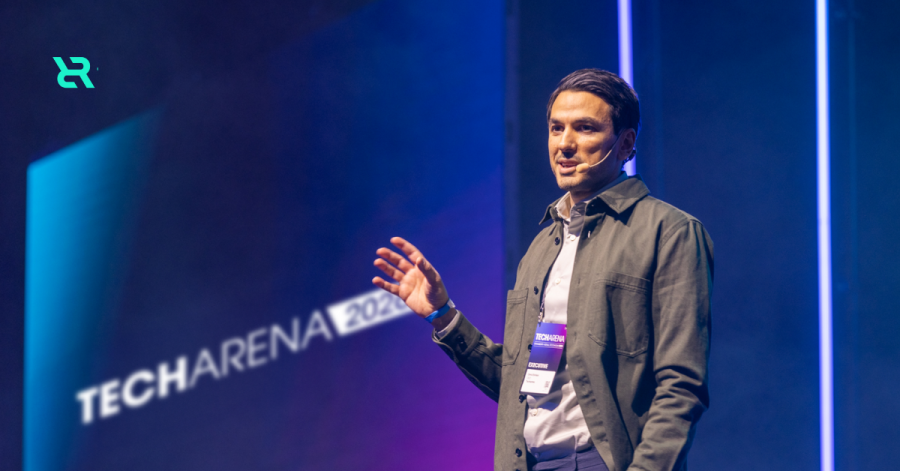
In this conversation, Omid Ekhlasi, the founder of Techarena explains why CEE entrepreneurs should join this year’s edition, discussing the unlikely path leading to Techarena’s success, why Techarena was intentionally designed as more than a startup–investor event, and how it creates the right conditions for real business outcomes through access to role models and peer networks.
First things first. How did you come to do this?
I would say the story starts with the fact that for the first 20 years of my life, everything was about football – training, eating, sleeping. Then I decided to go into marketing and sales. I was interested in journalism, and that took me to a company group around 12–13 years ago that was very focused on solving one of the biggest challenges we have in Sweden – we have a lot of researchers developing solutions that we’re not commercializing them.
As we grew, more founders started reaching out, so we decided to create a forum where they could get traction together, an entrepreneurship competition with founders, media, investors, and operators.
The first year was small: 30 companies, five jury members, 8 people in the audience – honestly, it was a disaster.
But we also created some small gatherings afterwards, which generated real value: investments, partnerships, and founders sharing challenges with each other. Those gatherings became the foundation of what we built next, and that’s how we got to where we are today – bringing together 18k people from 120 countries across two yearly events.
You often emphasize that Techarena is not just a startup–investor event. How intentional is that positioning?
If you only work in your own lab and only then try to sell your product and take it to market, you’ve already lost. You need to start early with pilots, engage in this creative dance with interested parties so that at least one company actually wants to purchase what you’re building, especially in the corporate or industrial sectors.
One of the most important stakeholders is potential customers, because one can’t build a business on investment alone.
Sweden is a very advanced market, where things move fast. That’s why we also brought in regulators and public-sector stakeholders where it made sense, for example, in fintech or digital healthcare.
One of the companies that won our competition in the first year later ended up on stage together with the minister for healthcare and representatives from municipalities. That kind of interaction matters because people start understanding each other directly instead of having debates in the paper.
This has all been very intentional, even if it’s sometimes made things harder to map to our own customers. [laughs]
There are multiple conferences focused on helping companies do business. What’s your approach on facilitating that in a quantifiable way? How would you explain it to someone who is trying to prioritize coming to Techarena against another international event?
Our goal is to create opportunities, and we do that in a few concrete ways. One is matchmaking, where people can use a platform to connect even before the event. We also host many industry-specific side events at the venue, so if you’re in healthcare or another vertical, you know exactly where to focus and who to talk to.
For founders, we create pitching opportunities where they can showcase their products. If you see someone on stage who’s interesting, that often leads to inbound traction. This year, we’re also introducing forced matchmaking. People scan a QR code, get assigned a topic, and are sent to a specific table. You don’t know who you’ll meet, only what you’ll talk about.
Sweden consistently punches above its weight in tech, from unicorn creation to global exits. What does the Swedish ecosystem do particularly well today, and what can international founders realistically learn from it?
The first part is the prerequisites, the opportunities you have in Sweden. On top of that, we have strong role models: companies like Skype and Spotify completely changed how people behave and consume products in their industry.
To build companies like that, hundreds of people are involved in scaling, internationalization, and sales, and that experience multiplies. They go on to start new companies, become investors or advisors, and the more role models you have, the higher the chance of building the next big thing.
What attendees can learn from Sweden is how founders meet, support each other, and invest in other founders. If someone like Anton from Lovable invests in you, you suddenly get access to rooms and experiences you didn’t have before.
You’ve introduced more structured moments like international delegation activities and a dedicated investor day ahead of the main event. What role does this kind of intentional scheduling play in creating real outcomes rather than just density?
The international delegation program is a way for us to take care of people who are coming, more than just giving them a ticket and information. We have a lot of respect for anyone who takes the time to come, and for investing their resources.
So we have to create opportunities for them to really understand the Nordic market, meet the right people, make the right connections, and when they get here, we want them to have all the information. We’ve done many delegation trips ourselves, and sometimes the value is in meetings, other times it’s in understanding the market, the culture, and how people operate. That’s why the event ends on a Thursday, so people can stay, explore, and continue conversations without pressure.
When you look at Techarena ’s speaker lineup this year, it spans political figures like Boris Johnson, to global sports icons like Zlatan Ibrahimović alongside founders and operators. How do you curate that range so it adds depth and perspective?
Not everyone cares about the full agenda. Some people only want very specific, niche sessions, like a CMO of a promising startup or a specific CEO that only other execs will listen to. So every year we make sure to bring in a few speakers that almost anyone can take something from.
These events are full of like-minded people with similar views, and sometimes you need to hear things from someone who’s been in power and can speak more freely. Performance is the same in sports or space as it is in business. You can’t cheat your way into it.
Looking specifically at this edition, what are you personally most looking forward to, either a particular moment, a theme, or a type of conversation you expect to surface?
I’m very much looking forward to meeting people and feeling the energy. When I see someone from Singapore, Nigeria, or Romania coming to something we’ve built and connecting with others, that really excites me.
From a professional perspective, every year we set a list of things we want to improve. Last year, there were nine items on that list and we crossed them all off. Some goals are simple; others force you to work in a completely different way. For example, going from one country pavilion to eight. Or, instead of creating invitations, we’ve done five international events in Germany, France, Denmark and Finland, shaking people’s hands and inviting them to our country and to our home, so I can’t wait to meet them again.