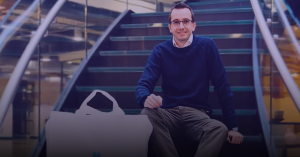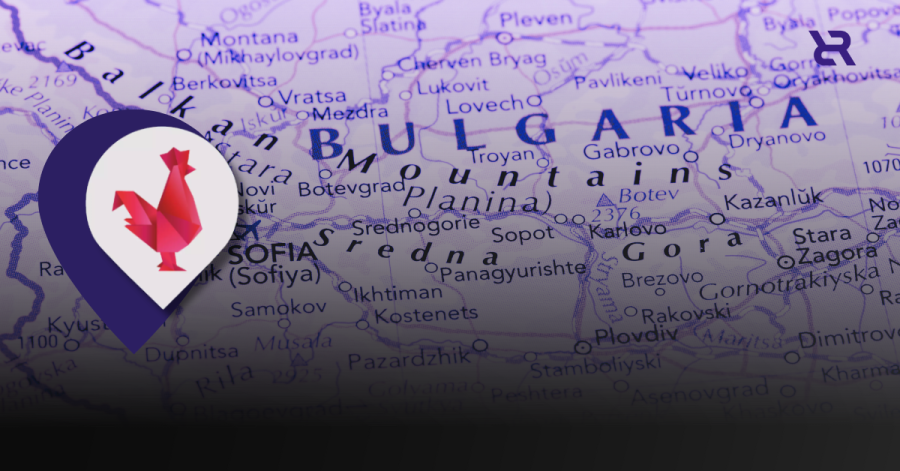
Over the past few years, French Tech Sofia has quietly become a connector between the Bulgarian startup ecosystem and one of the world’s most established tech networks. To understand how the community has evolved and where it is heading next, we spoke with Wilfried Durand, co-founder of French Tech Sofia, for his personal insights about the broader regional ecosystem.
What is French Tech?
French Tech was launched over seven years ago as a global initiative backed by the French government and local entrepreneurs. Its original ambition was to make the French startup ecosystem more visible, more connected, and more accessible, both in France and abroad.
“French Tech is a global brand,” Durand explains. “There is French Tech in France and French Tech abroad. In France, it helps startups access institutions and programs more easily. Abroad, the role is different; it’s about representation, networking, and building bridges.”
Today, the French Tech network spans roughly 70 countries worldwide, from Berlin and London to New York, San Francisco, and Tokyo. Sofia is one of the officially recognized hubs, approved by the French government.
A hub, not a club
Durand emphasizes that French Tech Sofia is not a closed circle for French founders only.
“You don’t have to be French to join,” he says. “If you’re a Bulgarian company looking to expand to France, or an international startup considering Bulgaria, you are more than welcome.”
The mission of French Tech Sofia is twofold. On one side, it aims to help startups based in Bulgaria access the French market by connecting them with customers, partners, and investors, and by easing their entry into one of Europe’s most established tech ecosystems. On the other, it supports French and international companies that are looking to establish operations in Bulgaria, drawing on local knowledge and trusted networks.
“We’re here to open doors,” Durand notes. “Sometimes it’s advice, sometimes it’s introductions. The real strength of French Tech is how global and practical it is.”
French Tech Sofia’s community today includes around 30 companies and 200 active members. These range from early-stage startups to more established tech players. The focus is broadly tech — software, hardware, SaaS, cybersecurity, and digital services.
“There is no formal selection process,” Durand explains. “If you feel there is value for you and for the community, then you belong here.”
A regional and European perspective
Across Central and Eastern Europe, French Tech hubs are steadily emerging. Some are fully established, others still in formation. Greece, Serbia, the Czech Republic, and Poland are among the closest and most active neighbors.
“We often collaborate informally,” says Durand. “When we attend big international events, we meet, we organize delegations, and we act as one network.”
One flagship example is VivaTech in Paris, where French Tech communities from across Europe co-organize side events. The European startup gathering hosted by French Tech has grown to around 300 participants, featuring speakers, startup pitch sessions, and even representatives from the French government.
Life and business in Bulgaria
For Durand personally, Bulgaria, and Sofia in particular, offer a specific balance.
“The quality of life is incredible,” he says. “It’s a city where you can move fast, find the right people with one phone call, and still enjoy nature and calm.”
From a startup perspective, however, challenges remain. “The local market is limited. You can’t change that,” Durand admits. “So startups here need to think international from day one.”
According to him, the biggest gaps compared to Western ecosystems lie in the lack of international sales and marketing experience, the shortage of middle-management talent capable of supporting companies beyond their early growth phase, and the limited availability of late-stage funding along with the structures that usually accompany it.
“Startups here are great at going from zero to one,” he says, “but scaling from one to ten is where it gets difficult.”
What’s next for French Tech Sofia?
Looking ahead, the focus is on deeper engagement rather than broader outreach. “We want to be more intentional,” Durand explains. “Stronger delegations to major tech events, more focused initiatives, possibly in areas like digital health, and closer collaboration between France and Bulgaria.”
The ambition is clear: identify a small number of startups each year and actively help them build meaningful connections between the two ecosystems.
Alongside his role in the community, Durand runs his own company — a web monitoring service that helps businesses track changes online for compliance, market intelligence, and quality assurance. He is also an active startup investor.
“My core focus is B2B SaaS,” he says. “I’ve built and scaled companies before, so I try to help founders avoid costly mistakes.”