Search for...

Disrupting ‘Boring’ Industries: How Deyan Dimitrov Turned Dirty Socks Into Profit

Disrupting ‘Boring’ Industries: How Deyan Dimitrov Turned Dirty Socks Into Profit, TheRecursive.com
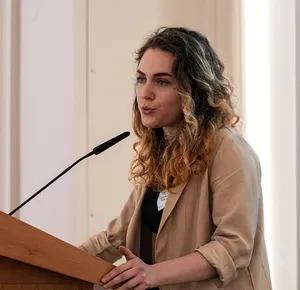
Image credit: Deyan Dimitrov
, ~

Laundry doesn’t usually make headlines. It doesn’t attract hype cycles, speculative capital, or founders chasing the next billion-dollar idea. And yet, globally, the laundry and dry-cleaning industry is worth hundreds of billions (projected to surpass $100 billion within the next decade) — still largely fragmented, offline, and inefficient. It’s the kind of space most startups usually ignore.

That’s exactly what drew Bulgarian Deyan Dimitrov, CEO and co-founder of UK-based Laundryheap, to it.

“We focused on the unexciting things,” he says. “And I think that’s where most startups get it wrong.”

Today, Laundryheap operates across 17 markets and close to 30 cities, coordinating logistics, cleaning, and delivery through a tech platform. But the company’s growth story doesn’t follow the usual script.

“There’s this obsession with exciting ideas,” he says. “But exciting doesn’t mean useful. And useful is what actually builds a business.”

“It was chaos”

Long before Laundryheap, Dimitrov was a teenager in Bulgaria experimenting with the internet at a time when there was no real startup ecosystem to support it. He built websites, some of which became popular enough to attract media attention. “I even did radio interviews when I was 12,” he recalls. “But back then, no one really understood what that meant.”

Still, he followed a more traditional path — studying finance abroad, first in the Netherlands and then in the UK, with the expectation of ending up in investment banking in London. “That was the plan. I was good at math, so finance made sense. But I realized pretty quickly, that wasn’t for me.”

Instead, he joined Rocket Internet, the Berlin-based venture builder known for scaling companies aggressively. What he found there was less a polished system and more what he describes as “controlled chaos.”

“It was chaos — but you learn incredibly fast. I was still at university, and suddenly I was hiring people, firing people, running operations.”

He worked across multiple markets, including Germany on Zalando, and saw firsthand how venture-backed growth operates at scale. “You move fast, yes — but you also make a lot of mistakes. In one case, we hired 300 people in a month. It sounds impressive, but it’s also a mess.”

That experience shaped his thinking more than any textbook or business school could have. When it came time to start his own company, he wasn’t interested in repeating the same patterns.

Read more:  Everything You Need to Know About Greece’s Digital Nomad Visa

“We didn’t raise anything”

Instead of chasing the next big trend, Dimitrov started looking at industries that were simply broken. “I was looking at where technology could actually make a difference.”

Laundry stood out as an industry not innovative enough. “It was outdated, inconsistent, and frustrating. The experience wasn’t good anywhere I went.”

At a time when companies like Uber were establishing on the market, he saw an opportunity to fix something old.

“It was such a traditional space, that’s what made it interesting. The opportunity wasn’t to create something new, but to make something old work properly.”

Even then, he resisted another startup instinct: raising money early. Dimitrov says that for the first two years, they didn’t raise any funding. Instead, they focused on bootstrapping and building a sustainable business. “The more time you spend fundraising, the less time you spend building,” he points. “And if you don’t understand your business, funding just amplifies your mistakes.”

By the time Laundryheap raised its first investment, the company had already proven itself.

“We were generating over a million pounds a year. We had product-market fit, and knew what we were doing.”

Laundryheap has raised £17 million (€20 million) in funding to date from investors and angels including Alex Chesterman, Nickleby Capital, Verb Ventures, The Side by Side Partnership and Claret Capital Partners.

“We chose to expand”

Then came COVID, and unlike many tech companies, Laundryheap didn’t benefit from it. “People stopped going out. They didn’t need laundry anymore. Our B2B business disappeared overnight.”

The company suddenly had no demand. The obvious response would have been to cut costs and wait for recovery. Instead, Dimitrov made a decision that, in hindsight, defined the company’s trajectory. “We had two options: scale down or push forward. We chose to expand.”

During this time Laundryheap was entering new markets — launching in the US, expanding in the Middle East, and moving into Asia. “We moved faster during COVID than before it.”

The pandemic removed one of the biggest barriers to expansion: the need to be physically present.

Read more:  Bulgarian-founded AI Platform Mentessa Secures EU Grant For The Development of Its Intelligent Skills Agent

Today, Laundryheap continues to expand globally, but Dimitrov remains skeptical of how success is often measured, especially in Europe.

Europe is fragmented. Every country has different regulations, different systems, different costs. You spend time solving bureaucracy instead of building your product,” he adds. “If Europe was one market, we would have scaled very differently.”

Instead of competing head-on in every market, the company often chooses to acquire local players. “In many cases, it’s simply more efficient,” Dimitrov notes. “You’re entering a market where someone has already built relationships, understands operations, and has gone through the same challenges.”

In February, Laundryheap announced its launch into four new markets: Colombia, Mexico, Malaysia, and Scotland. The company now operates in 28 cities across 16 countries, with further launches planned later this year. According to their data, Laundryheap serves more than 400,000 customers globally and has strengthened its position through several major acquisitions.

“We’re not growing just to show big numbers,” Dimitrov concludes. “Top-line growth doesn’t mean much if the fundamentals aren’t there.”

Help us grow the emerging innovation hubs in Central and Eastern Europe

Every single contribution of yours helps us guarantee our independence and sustainable future. With your financial support, we can keep on providing constructive reporting on the developments in the region, give even more global visibility to our ecosystem, and educate the next generation of innovation journalists and content creators.

Find out more about how your donation could help us shape the story of the CEE entrepreneurial ecosystem!

One-time donation

You can also support The Recursive’s mission with a pick-any-amount, one-time donation. 👍

https://therecursive.com/author/teodoraatanasova/

Teodora Atanasova is a Senior Editor at The Recursive, covering venture capital, startup growth, and the evolution of the tech ecosystem across CEE. Her reporting focuses on funding rounds, exits, startups expanding internationally, and major tech companies opening R&D hubs in the region. She produces podcast and video content and contributes in-depth analysis on the trends, partnerships, and policy developments shaping the region’s innovation landscape.