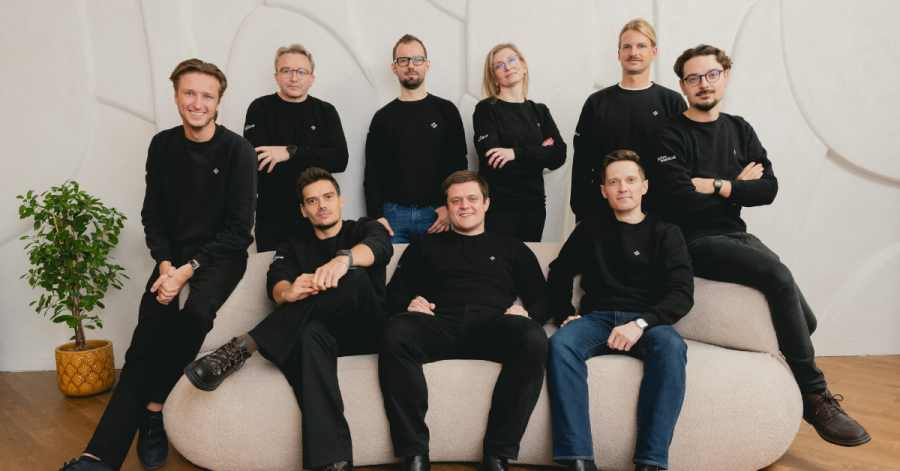
Warsaw-based Jutro Medical, an AI-first primary care operator integrating online and offline care, has secured €24 million in fresh capital in a round led by Warsaw Equity Group (WEG). The round also saw participation from Vinci, naturalX Health Ventures, Fluent Ventures, Aternus, KAYA VC, and Inovo VC, alongside a debt component provided by mBank and Orbit Capital.
The funding extends Jutro Medical’s Series A to €36 million in total, with €12 million secured earlier in March, and will be used to scale its clinic rollup strategy in Poland and beyond, while further expanding the use of AI agents in day-to-day primary care operations.
Founded in 2020, Jutro Medical has evolved from a single tech-enabled clinic into a fully integrated primary care operator. The company now runs 20 clinics across Poland, serves around 120,000 patients, and reports an average patient rating of 4.94 out of 5 across more than 500,000 visits, alongside an NPS of 86.
“By running our own clinics on our own software, we’ve learned firsthand which tasks can be handled by AI,” said Adam Janczewski, founder and CEO of Jutro Medical. “Instead of hiring more staff, we now build AI agents that do the same work — freeing clinicians to practice medicine, not paperwork.”
Building the AI layer on proprietary infrastructure
Over its first four years, Jutro Medical focused on developing its own electronic health record (EHR) system and operational software, which now underpins every clinic in its network.
Today, Jutro’s AI agents support patient intake and assist with visit documentation, preparing context before appointments. Doctors remain fully responsible for clinical decisions, with AI use being opt-in and traditional appointments always available.
According to the company’s data, it is growing 270% year over year, and in the past month alone nearly 1,500 doctor visits were supported by AI.
“These agents already manage thousands of patient interactions every month,” Janczewski added. “That gives us confidence not just in the technology, but in its readiness for scale.”
Addressing Europe’s primary care bottleneck
Despite the demand, OECD and EU sources highlight underinvestment in primary care relative to other areas, with pressures from workforce and unmet needs.
“Primary care is undergoing significant structural change across Europe, with thousands of small GP practices approaching retirement each year,” said Jan Szumada, Investment Manager at Warsaw Equity Group.
“Jutro Medical is capitalising on this opportunity, nearly quadrupling its revenue year over year while keeping EBITDA around break-even, which is a rare combination in this market.”
According to Szumada, Jutro’s ability to combine operational discipline with AI-driven efficiency was key to WEG’s decision to lead the round. “They’re proving that the AI rollup strategy can work in healthcare, and at meaningful scale,” he said.
Scaling the AI rollup model
Jutro Medical positions itself as the first operator in Europe to apply an AI-powered rollup model to primary care at scale. The company acquires clinics and integrates them into a unified technological and operational platform, giving each location access to the same EHR, standardized workflows, and AI agents.
This year alone, Jutro has added nine clinics to its network and expects to complete around 20 acquisitions annually. The model is designed to ensure consistent quality of care while improving margins through shared infrastructure and automation.
The new capital will fund further acquisitions in Poland and support expansion into other European markets. With more than 100,000 small primary care practices across Europe, Jutro sees a significant opportunity to consolidate a fragmented sector and set a new standard for publicly funded care.
“For us, this is a strategically important investment in healthcare,” said Bartosz Drabikowski, CEO of Vinci. “What stood out was Jutro Medical’s mission to improve access to high-quality care, combined with the practical, real-world use of AI in everyday clinical operations.”
Drabikowski added that the company’s ability to already demonstrate tangible benefits, from reduced waiting times to more time for doctors to spend with patients, played a decisive role. “These solutions are implemented at scale and deliver clear value for both patients and clinicians. We’re pleased to support Adam and his team in the next stage of growth.”