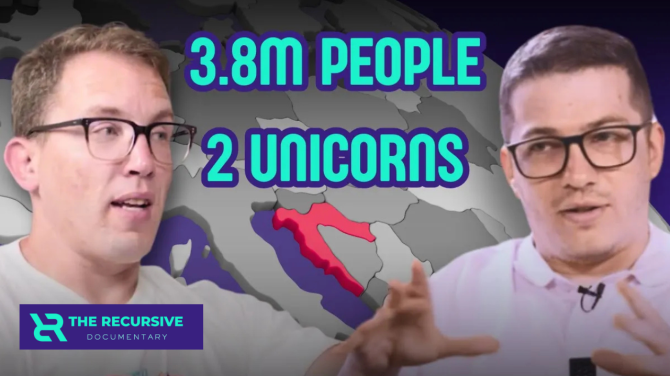


Outsourcing has been a “very natural and organic course of growth” for many regional tech ecosystems. For some, it still is, especially in more emerging economies. The case we focus on today is the Kosovar tech ecosystem, which I had the opportunity to discuss with Jeta Zagragja, CEO and Founder of AnchorzUp, a Kosovar tech hub that enables businesses to augment their teams through quality tech talent, and delivers end-to-end digital solutions — from UI/UX design to software development and digital marketing.
A choice for Impact
Jeta’s career spans from Kosovo to Switzerland, the USA, and back home — marked by roles in startups, a SaaS company, and the banking sector. After completing her MBA in the U.S., and gaining global experience, she returned to Kosovo with a clarity of purpose…
“I chose to remain in Kosovo and genuinely make a much larger impact than what I could by just focusing on my own individual career or even just on my team,” she stated. For Jeta, as we will find out, giving back through mentoring is a deeply fulfilling aspect of her work — and it reflects in how she leads AnchorzUp.
The core business of her agency is to augment the engineering teams of international clients — particularly firms in the United States, Australia, Switzerland, and other Western markets — by providing highly skilled developers who work remotely and have a cultural fit with the client. To top it off, the experience gained on global projects is also excellent “training” for building their own product.
Which brought me to a staple debate…
To outsource or not to outsource?
Should we concentrate on delivering services to foreign clients, or should we pour our scarce resources into building our own products? Own our solutions, or sell our expertise? I believe there is not one country in Central and Eastern Europe who didn’t go through this dilemma at some point. In many early instances, the notion of building products was extensively celebrated, presented as a holy grail for emerging markets to prove their worth on the global scene.
With time, the debate balanced out, so today we can look at service-based ecosystems with more gratitude and respect. In any case, outsourcing and product‑centric models are like two sides of the same coin — they both require skilled engineers, disciplined processes, and a firm grasp of market needs.
Yet, each path has pros & cons on both sides of the spectrum. Outsourcing offers a relatively predictable cash flow. Contracts with established multinational firms bring stable salaries, and an immediate validation of a team’s technical competence. Product building, by contrast, is a long-term game that promises the tantalising prospect of equity, brand recognition, and (only) the possibility of scaling beyond the limits of billable hours.
In Kosovo — and many other emerging tech ecosystems, where capital markets are still immature and the local venture‑capital scene is nascent, stability outweighs the risk‑laden dream of a unicorn. Jeta argued that outsourcing has been a “very natural and organic course of growth” for the Kosovar tech sector. It provides a vital pathway for utilizing local talent on global projects, offering competitive compensation and improving staff well-being and skill sets.
“They get to gain experience by working in very well-established systems, good processes, global projects — and learn how to build products along the way,” she explains.
For her, services and product building are not mutually exclusive but rather complementary, supporting each other’s growth. Different mindsets are required for service-oriented versus product-oriented teams, yet “there’s a place for both whoever chooses one or the other.” In the end, it isn’t just the technology itself, but the “go-to-market strategy and how you’re going actually to solve a market problem.” Many tech companies, Jeta observes, make the mistake of creating sophisticated products in a bubble that ultimately fail to find a market.
Positioning in the global outsourcing landscape
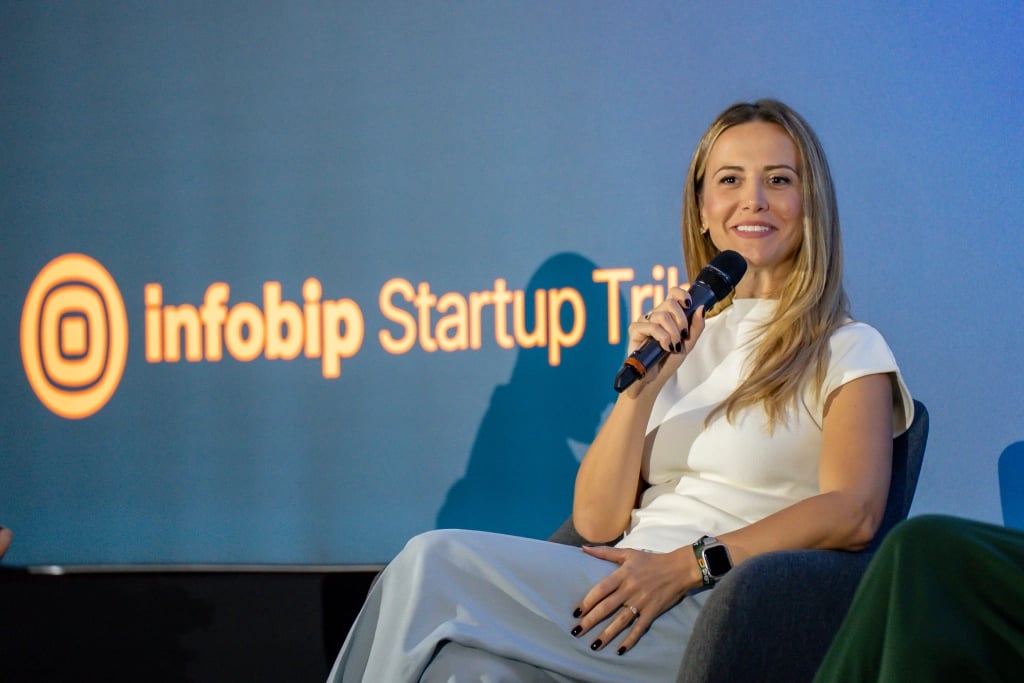
One challenge of outsourcing, though, is that it is quite often reduced to the game of numbers (people and price). Thus, in a global outsourcing market dominated by giants like India and Poland, smaller nations like Kosovo must find their unique competitive edge. As Jeta re‑immersed herself in the local ecosystem, she found out that the country’s most immediate competitive advantage lay in its human capital: a pool of engineers who speak fluent English, share cultural affinities with Western clients, and can work within overlapping time zones. By positioning themselves as a cost‑effective yet culturally proximate partner, firms like AnchorzUp can secure contracts that would otherwise flow to larger hubs.
The service model fits neatly into Kosovo’s broader economic context. The Euro as a stable currency shields revenues from the volatility that can afflict emerging markets. At the same time, the country’s relatively low cost of living allows firms to price competitively without sacrificing employee well‑being. Moreover, the service‑first approach aligns with the country’s historical need for rapid job creation; each new contract translates directly into hires, helping to curb brain drain and retain talent domestically.
Leadership evolution and the “Art of Letting Go”
For Jeta, entrepreneurship is fundamentally about transforming problems into opportunities. Reflecting on her diverse career path from equity partner to C-level executive, and now founder and CEO, she recognizes that “leadership really evolves depending on the situation, the company, and the stage where the company is or the size of the team.”
Jeta’s personal approach? “I never really looked at the job description but I looked at the problems that I can tackle and take responsibility to fix them.”
However, a central challenge for any leader, particularly as a company scales, is “the fine art of letting go.” Finding other experts who will jump on problems… This transition is “definitely not comfortable”, she admits, but it is “absolutely necessary, so you don’t become the bottleneck of that growth that you desire so much.”
Delegating authority, not just tasks, empowers teams to learn and grow. Jeta draws a relatable analogy from parenting: “I have a two and a half year old and… if I want to continuously stand behind him and make sure that he doesn’t fall, he’s not going to learn to assess the risks and learn to walk hinself.” Similarly, with teams, leaders must accept “some bruises and some bumps and some tears along the way,” understanding that “they’re not going to do it the way you would do it.” This requires managing one’s ego and embracing team autonomy for collective growth.
On AI, Women in Tech and the Future
Jeta is a strong advocate for women in tech and leadership, a topic particularly relevant in the Balkans, where a significant leadership gap persists despite strong representation in STEM at the science level. To bridge this, she emphasizes the critical role of role models and media visibility. “How you imagine is by seeing role models, by having people in media, by having women leadership,” she explains, highlighting her own commitment to “say yes to all these things” even when busy, knowing “it’s one way to influence a change.”
She also addressed the impact of AI on tech talents. While AI can generate eloquent content, “sometimes we’re losing the critical thinking ability because we’re not warming up our brains to even put our thoughts together.” For junior developers, AI will drastically change their learning curve. Jeta predicts that the “junior” phase (0-3 years) will shrink to mere months, pushing developers to tackle more sophisticated tasks earlier. This will require seniors to focus even more on “problem-solving and to really putting together the business objectives with technical capabilities,” as this is where they offer the most value. Ultimately, she believes the key skills for the future (of IT) will be adaptability, flexibility, and critical thinking.
“Nothing can replace experience… But I think gaining experience will, in a way, speed up.”
Looking ahead ten years, Jeta’s vision for AnchorzUp is clear: “grow as much as possible without losing the quality of service and the culture of the team.” Culture, she believes, is “the glue to offering consistent quality services” and fosters the ownership and integrity essential for client relationships. In the meantime, they are also polishing their own product, hoping this is only the first in line.