

Over 33 years ago, a group of university friends from Bulgaria set out to establish a company focused on artificial intelligence. At the time, AI was a field that was little known and often perceived as expensive, complex, and difficult to apply in real business environments.
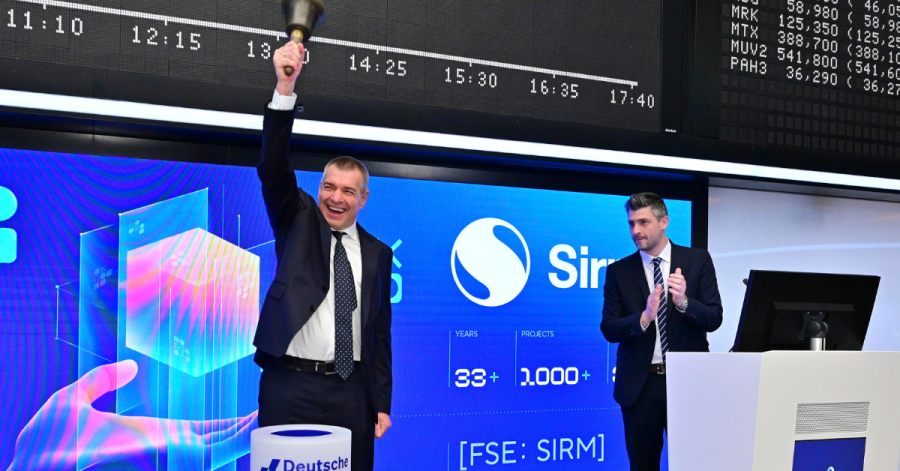
This is what Tsvetan Aleksiev, CEO of Sirma Group Holding, tells me as the company celebrates a new milestone. This week, Sirma officially opened trading on the Frankfurt Stock Exchange, marking the successful completion of its dual listing and a new phase in its growth as a European AI technology provider.
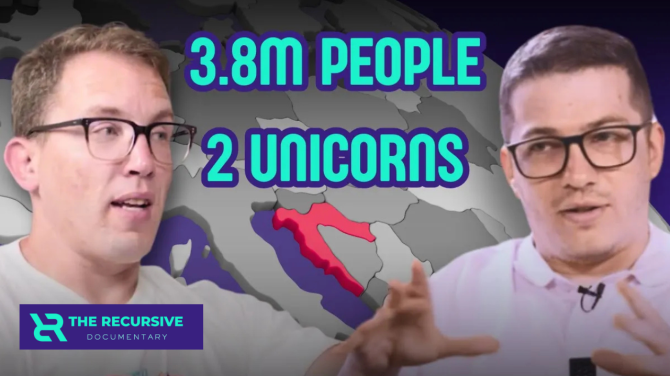
Aleksiev shared insights in a conversation with The Recursive, outlining the thinking behind the listing and the company’s broader growth strategy.
A long-term path to international markets
According to Alexiev, Sirma has viewed international market access as a long-term objective since its initial public offering in Bulgaria in 2015. At the time, the local listing was considered a first step toward a larger European or global exchange.
While NASDAQ had once been considered, practical factors led Sirma to focus on Europe. “NASDAQ has very high expectations, and we would still be a small company there. Everything is much more expensive — even management liability insurance can reach a million dollars.”
Instead, Frankfurt emerged as the logical choice. “Frankfurt is one of the strongest European exchanges and a natural fit for a European company like ours,” he said. “Our expansion in the DACH region made this decision even more compelling.”
The EuroBridge segment, created through cooperation between the Bulgarian and Frankfurt stock exchanges, also helped streamline the dual-listing process. The move is expected to improve liquidity, broaden investor access, and increase the company’s visibility among international institutional investors.
From early AI pioneer to enterprise platform provider
Founded in 1992, Sirma has evolved into a European enterprise technology group with more than 800 employees and a strong focus on AI.
“The original name of Sirma was Sirma AI. Even 33 years ago, we were working on artificial intelligence — expert systems, early neural networks — long before the current boom,” Alexiev noted.
Today, the company develops enterprise software across banking, insurance, healthcare, transportation, retail, hospitality, and the public sector, combining industry expertise with proprietary AI platforms delivered through Sirma.AI Enterprise.
The company’s revenue for the past year exceeds €66 million. In 2024, Sirma merged its subsidiaries and integrated them into the parent company. The profit for the past year reaches €1.8 million, according to their data.
“AI is a key factor for transforming business,” he said. “We believe organizations will become symbiotic systems of humans and AI — not replacing people, but making them superhuman.”
Europe’s AI gap
This vision, however, is unfolding at different speeds across regions. Alexiev spoke candidly about Europe’s lag in AI adoption compared to the United States. “In the U.S., nearly 100% of our projects involve AI. In Europe, decisions are slower,” he said. Alexiev pointed to regulation as one factor shaping the pace of adoption. The EU’s AI Act, the world’s first comprehensive AI law, introduces a risk-based framework with strict requirements for high-risk systems, transparency obligations, and penalties of up to €35 million or 7% of global annual turnover for non-compliance. The rules apply even to non-EU companies operating in the bloc, increasing compliance costs and complexity for global providers.
At the same time, the U.S. has announced up to $500 billion in AI infrastructure investment, compared with the EU’s planned €200 billion initiative to mobilize funding for AI development, reinforcing perceptions of a widening investment gap.
Still, he sees momentum building. “Europe has begun to recognize its lag and is investing in local models and data centers. This is becoming a geopolitical race in AI.” Policymakers across the EU are backing sovereign AI initiatives, including gigafactories and large-scale infrastructure projects aimed at strengthening technological independence.
Despite structural challenges, Central and Eastern Europe bring unique strengths. “Companies from difficult environments become more adaptive, innovative, and aggressive in pursuing global markets,” Alexiev said. “We also have strong IT talent, sometimes exceeding Western Europe, and cost competitiveness.”
Credibility and capital for growth
In this context, Sirma is gradually extending its presence beyond its home market. The Frankfurt listing is expected to strengthen Sirma’s credibility with large international clients, particularly in regulated industries. At the same time, access to a more liquid market is seen as essential for funding future growth. While the Bulgarian Stock Exchange has provided discipline and transparency, its smaller scale limits capital-raising opportunities for expansion.
“We have never regretted becoming public. It brought discipline, transparency, and many benefits. But it is smaller and less liquid,” Alexiev added.
The dual listing is also viewed as a milestone for Bulgaria’s capital market. Manyu Moravenov, CEO of the Bulgarian Stock Exchange, described it as a significant achievement that demonstrates Bulgarian companies can compete on the European stage while maintaining strong ties to their domestic market.
From Deutsche Börse’s perspective, the listing reflects the growing integration of European capital markets. Caroline von Linsingen, Head of IPO & Growth Financing, noted that Frankfurt serves as a gateway for innovative European companies seeking broader visibility and liquidity.
Ultimately, Frankfurt is a platform for long-term growth for Sirma.
“We see our listing as a positive signal to international investors and to Bulgarian companies ready to compete globally,” Alexiev added.
Sirma plans to continue expanding through acquisitions that open new markets and client segments, while relying on its internal R&D capabilities for technological development.