In the rapidly evolving world of renewable energy, a new model is moving from the fringes to the mainstream: Energy Communities. But what exactly are they, and how can they transform how we consume electricity?
We found answers in one special episode of The Energy Bridge, a community powered by intergenerational network of energy professionals, which aims to bridge the CEE energy ecosystem with Western Europe and beyond. The co-founders regularly run a podcast, alongside many other initiatives, and most importantly a yearly Forum.
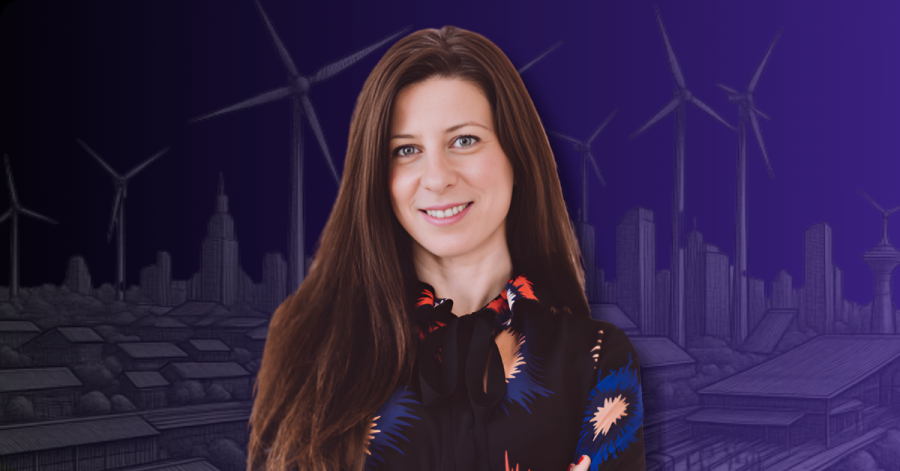
Recently, Daniel Schaub and Rahul Mishra sat down with Lorena Skiljan, the visionary CEO and founder of Nobile, to discuss her journey from law to energy entrepreneurship and why decentralized, bottom-up supply is the “next big thing” on the market.
From law to kilowatts: Lorena Skiljan’s journey
Lorena Skiljan’s path to the energy sector was anything but linear. Originally from Croatia, she moved to Vienna to study law before transitioning into the utility industry. After completing an Energy Management MBA, she led product development for Austria’s largest utility, overseeing everything from natural gas to electromobility.
Her “aha!” moment came during a research project in Vienna’s Viertel 2 district. By creating an energy sandbox where consumers could buy electricity directly from local producers, she saw the future.
“Energy communities are the next big thing on the energy market,” Lorena explains. This realization led to the birth of Nobile, a platform designed to make energy sharing seamless and digital.
If you own a solar panel (an asset) and your neighbor wants green energy (a consumer), you have a matchmaking problem. In the past, you had to sell your excess power back to a utility at a pittance, while your neighbor bought it back at a premium.
Lorena uses a simple analogy to explain the concept of how she sees solution: “Think of the energy market like the travel industry. In the old way, if you wanted a holiday, you went to a large travel agency (The Utility). In the new way, you use a platform like Booking.com to connect directly with the apartment owner.”
Nobile acts as that digital intermediary. It tracks electricity in 15-minute intervals, matching local energy production with local demand. The platform handles the boring but essential parts: APIs to the Distribution System Operators (DSOs), data processing, and — most importantly — the monthly bill.
“What you need is an electricity bill… on the monthly basis,” she notes. “If you can’t provide that, you just can’t run the model.”
The benefit of energy communities
One of the biggest misconceptions about energy communities is that they are just a bunch of neighbors with Rooftop PV. Skiljan is quick to point out that a solar-only community is a “bad load curve” because it only works when the sun shines. To create a resilient local market, you need a portfolio.
Nobile’s pools often mix wind, hydro, and solar. “In the summer, there are a lot of PV, but wind is not producing… in winter there is no PV, but wind is producing at its maximum,” she explains.
This mix has a surprising social side effect: it kills NIMBYism (Not In My Backyard). Skiljan tells the story of several Austrian municipalities where residents were initially skeptical of new wind parks close to their homes. Once Nobile helped set up a community model where residents got direct, cheaper power from those specific windmills, the opposition vanished. “They know, ‘Okay, when I… look out of my window to that windmill and it does like this, it does for me. It’s cheaper than utility.’”
In a nutshell, why should businesses and households join an energy community? According to Lorena, there are three primary drivers:
-
- In Austria, members of energy communities can save up to 60% on grid fees because the electricity doesn’t travel across the entire national network.
- Participants often pay zero electricity taxes on the energy they share locally.
- Instead of being subject to volatile global markets, consumers negotiate prices directly with asset owners (e.g., 7–9 cents per kWh instead of 14 cents).
“The DSO [Grid Operator] is a monopolist… I’m not against [it],” Skiljan admits, acknowledging the natural monopoly of infrastructure. However, she argues the role of the DSO must evolve into a data provider. In Nobile’s world, the DSO would tell the platform exactly how many of a customer’s 3,000 yearly kilowatts came from the local windmill versus the national grid, allowing for precise, split billing.
The €100 million dream
The next frontier for Nobile is Germany. Despite the regulatory delays, the demand is surging. Skiljan reports a massive spike in inbound calls from German SMEs and municipalities since the country passed its new energy sharing laws.
When asked what she would do with a hypothetical €100 million into the energy transition, Skiljan’s answer is split between the entrepreneur and the citizen. As a CEO, she’d scale the bottom-up model to ensure every consumer has a local choice. As a policy thinker, she has one word: storage.
“Storage, storage, storage… Energy storage,” she emphasizes. “Then I don’t need any thermal assets or nuclears because then I don’t need that baseload power plants. I need flexibility.”
Despite the friction with established utilities and the inefficiency of European democratic regulations, Skiljan remains an optimist about the European model. She isn’t looking to kill the big utilities — she just wants to give them some much-needed competition from the ground up. In her view, the energy cake is getting bigger (thanks to AI data centers and EVs), and there’s plenty of room for both the old-school giants and the new-school matchmakers.
Watch the full podcast episode below: