
This week, health.tech | global summit returns to Messe Basel (March 3–5, 2026). It gathers the hospital executives who approve new clinical workflows, the insurers who decide what gets reimbursed, and the investors who keep asking whether innovation can scale without breaking the system.
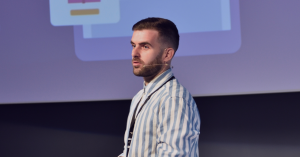
Among them is Kardi Ai — a Czech medtech building long-term ECG monitoring with AI evaluation, now scaling into DACH. CEO Vlastimil Hrabal is scheduled to speak at The CEE Health & Medtech Reception, a side event running alongside the summit and gathering series A investors and DACH hospital procurement teams.
The monitoring gap Kardi Ai is built around
Kardi Ai’s core argument is straightforward, which is a point in its favour. Rhythm disorders don’t reliably show up during short monitoring windows. Symptoms come and go. Events can be rare. When monitoring is limited to 24 or 48 hours, diagnostic yield becomes a probability problem — and for many patients, not a favourable one.
The company’s answer: extend the window to months, not days. It offers 3-, 6-, and 12-month options, built around a chest strap that transmits ECG data to an AI-powered data ecosystem, where Kardi Ai’s 2 models evaluate the signal and generates physician-ready outputs. Reports are delivered on average in 5 minutes after the measurement decreasing the time between the signal and diagnoses from 4 – 5 weeks to 5 minutes.
The detection curve in its investor materials makes the logic visible: from 10% on day 1 to 41% by month 1 and 100% by month 12 (as presented). The claim alongside it — a 30% detection rate, roughly 6× higher than 24-hour Holter monitoring — is a company figure, not an independently published study. The AI layer also compresses physician review burden. Clinicians have heard the pitch before. What they want to know is whether long-term monitoring saves them time, or just gives them more data to wade through.
MDR Class IIa, clinical data, and Czech adoption
Kardi Ai received the EU MDR Class IIa certification in October 2025, valid across the EU — the most direct answer to first-line regulatory objections. Certifications doesn’t guarantee market entry, but it removes one of the earliest reasons to say no.
What carries further is the Czech traction, a real-world proxy for workflow tolerance. Kardi Ai says it is active in 40 hospitals, working with 140 Czech cardiologists (~15% of the national market), with 3,500+ users and 10,000+ clinical findings to date. The service is reimbursed by two Czech insurance companies — in Europe, reimbursement is often a more meaningful signal than pilot count.
The human metric: 300+ serious cases detected
“It’s not just about the technology. It’s about the fact that our device has already helped more than 300 people detect serious heart problems that would otherwise have gone unnoticed. That’s 300 lives significantly improved or even saved. And that’s the biggest reward for us,” Vlastimil Hrabal, CEO&Co-Founder Kardi Ai.
Behind the “300+” are reported, traceable cases — patients where Kardi Ai’s long-term monitoring surfaced serious rhythm disorders, most commonly atrial fibrillation, that standard short-window testing had missed. Hrabal points to a neurology pilot as illustration: 100 post-ischaemic stroke patients showed no arrhythmia after three weeks on a Holter monitor. The same cohort then wore Kardi Ai’s belt for three months — and the company detected AF in 27% of them, a population already at elevated risk of a second stroke. The broader 300+ aggregates similar physician-reported detections, including cases that escalated to intervention, accumulated over the past several months.
Kardi Ai is scaling to DACH
The MDR milestone set the tone for Kardi Ai’s scaling plans. The company doubled sales in the past five months compared to the previous two years, signing initial deals and launching pilots across Bulgaria, Poland, Slovakia, and Romania with partners including Medicover, Haelan, and Acibadem.
Outside Europe, the company is in the process of obtaining certification in India and the UAE, and is preparing an FDA pathway in cooperation with HITLAB.
Germany as the first DACH entry point
Kardi Ai’s investor deck places Germany in the first wave of DACH rollout, scheduled for Q4 of 2026.
German hospital buyers start with the uncomfortable questions: where data is stored and who governs it, who reviews AI flags and how escalations are handled, whether outputs integrate into existing cardiology pathways without new overhead.
Why Basel matters now
Kardi Ai is scaling and stands on legible numbers: MDR IIa, 40 hospitals, Czech reimbursement, 29% detection rate, 300+ saved lives. The company is beyond early-stage mode, it is making an expansion.
For Series A investors, the question is whether the Czech model can be repeated and what is the cost, considering that Germany has longer procurement cycles and very strict governance expectations.
For DACH hospitals, it’s more immediate: can long-term ECG monitoring be adopted without increasing cardiologist workload?
Basel doesn’t answer either. But it is one of the few weeks in Europe when the people who hold those answers are in the same building, so opportunities are definitely there.