
Last week, key parts of Europe’s defense-technology plans were left in doubt. Several proposed EU “flagship” defense projects, including a counter-drone system previously described as a ‘drone wall’, appeared to lack firm political support ahead of a Brussels summit.
What first looked like a procedural oversight also reflected deeper divisions within the EU. As Reuters reported, the European Commission, which proposed the initiatives, sees defence as an area for greater EU involvement, while many national governments still regard it as a national responsibility, best handled through NATO or smaller coalitions.
For Europe’s tech ecosystem, the implications run deeper than institutional politics. At stake is whether one of the continent’s most advanced and sensitive technology stacks, AI-driven airspace defense, will emerge through coordinated European programmes or fragmented national efforts.
What the “drone wall” actually is
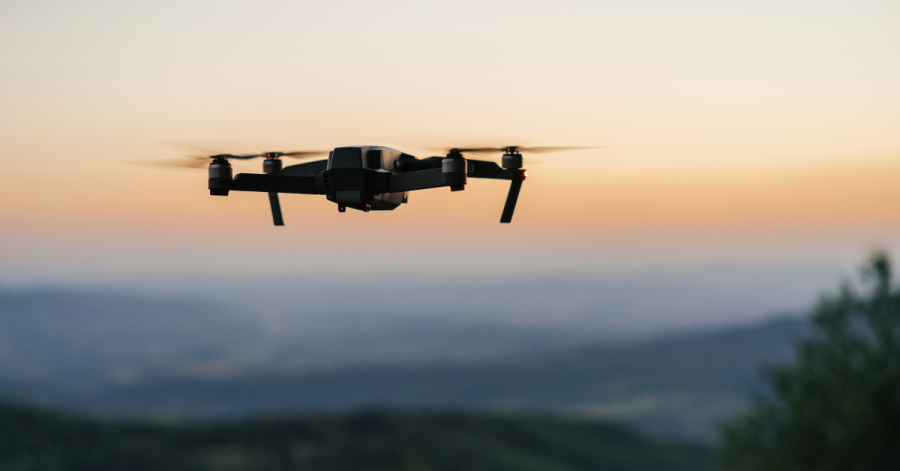
Officially renamed the European Drone Defense Initiative, it describes a distributed, software-centric airspace defense system designed to detect, track, and neutralise hostile unmanned aerial vehicles across Europe.
Technically, it is a layered architecture:
-
- Distributed sensing: radar, RF detection, acoustic arrays, electro-optical and thermal cameras capable of spotting low-flying, low-signature drones.
- Sensor fusion and AI perception: machine-learning models aggregating signals into a coherent air picture.
- Command-and-control software: prioritising threats and proposing responses in real time.
- Countermeasures: from jamming and spoofing to low-cost interceptors and, in some cases, kinetic effectors.
- Interoperability: linking national militaries, border forces, and agencies such as Frontex.
- Distributed sensing: radar, RF detection, acoustic arrays, electro-optical and thermal cameras capable of spotting low-flying, low-signature drones.
Crucially, this is not a single system but a system-of-systems, designed to scale across borders while remaining modular. That modularity is also what makes it politically contentious: it requires shared standards, shared data, and shared governance.
Why Europe is debating this now
On 10 September 2025, Poland reported that 19 objects suspected to be Russian drones entered its airspace during a Russian attack on Ukraine and some were shot down by Polish/NATO aircraft. This followed similar incidents in Romania, Denmark, and Germany.
Northern and eastern member states, Finland, Lithuania, and others, have been the most vocal backers of a pan-European approach. For them, drones are not a future risk but a present one, tied to hybrid warfare tactics already deployed by Russia.
At the same time, doubts about long-term US commitments to European security, sharpened during President Donald Trump’s tenure, have pushed Brussels to explore greater strategic autonomy. The drone wall sits alongside three other proposed flagships — Eastern Flank Watch, a European Air Shield, and a European Space Shield, intended to prepare Europe for defense by 2030.
Industry perspective
For Europe’s defense-tech founders, the debate exposes a familiar problem: innovation speed versus institutional structure.
According to Bogdan Ochiană, Founder and CEO of Orbotix, the difference between Europe and Ukraine is not talent, but feedback loops. In Ukraine, operational necessity collapses procurement, testing, and deployment into a single continuous cycle. Systems are iterated in weeks because lives depend on it.
In the EU, the constraints are structural. Certification, safety, and accountability are essential, but they slow iteration.
“At the same time, Europe still lacks sufficient early-stage private capital and startup-oriented public grants that support rapid hardware and software development,” shared Ochiana.
Procurement also remains a key bottleneck. “Startups must be able not only to build, but to manufacture and sell through processes that were largely designed for legacy contractors. The challenge is not to lower standards, but to modernize procurement so innovation, production, and adoption can move in parallel,” he added.
Capability gaps
From an engineering standpoint, Europe faces two interconnected capability gaps, says Srdjan Kovačević, Founder and CEO of Orqa FPV. The first is unmanned capability at the tactical land-force level.
“Armoured assault in the age of drones is as suicidal as a calvary charge was in the age of machine guns and tanks. NATO countries, especially the European allies, must urgently transform their land forces by ramping up their unmanned capabilities,” shared Kovačević.
The second gap is air defense economics. “NATO’s current systems aren’t able to provide sustained protection against low-cost unmanned aerial threats. Using a €100k missile to shoot down a €30k drone clearly isn’t sustainable. We need to re-think air defense and adapt it to a reality where massive air strikes are no longer the privilege of top tier powers”, said Kovačević.
He explained that, in practical terms, the required transformation of land forces would mean integrating organic unmanned capabilities into every manoeuvre battalion across NATO armies. “This “unmanned capability” can be further defined as attritable short- and medium-range reconnaissance drones, as well as low-cost precision strike drones. This type of organic unmanned capability is simple, effective, and can be achieved quickly and cheaply,” he explained.
Ways to scale? AI and autonomy, a lesson from Ukraine
Ochiană frames AI not as a way to remove humans from decision-making, but as a way to make human control viable at modern threat scale. No operator can manually track and classify hundreds of fast-moving aerial objects in real time. AI must handle perception, prioritisation, and coordination, while humans retain command intent.
“In practice, this shifts the operator’s role from piloting individual assets to supervising a system-of-systems. That shift is essential for any credible “drone wall” concept. Without AI-driven autonomy, airspace defense simply cannot scale. With it, Europe can build layered, interoperable, and resilient defenses that are effective, affordable, and fully aligned with democratic control,” said Ochiană.
Kovačević adds the economic dimension. “In a world where low-cost, mass unmanned strike capability is widely available, AI is critical for maintaining accurate real-time situational awareness and for orchestrating efficient counter-effect actions,” he added.
Technically, this shifts operators from piloting individual assets to supervising systems-of-systems. Politically, it raises questions about trust, oversight, and accountability. But without this shift, any pan-European airspace defense remains theoretical. Ukraine provides the most immediate real-world validation of this model. Facing sustained, large-scale drone and missile attacks, Ukrainian forces have been forced to develop layered air-defense systems where AI-enabled detection, classification, and cueing compensate for limited human bandwidth and scarce interceptors.
During a speech in October, Ursula von der Leyen explicitly acknowledged this role, underlining Ukraine as a critical partner rather than just a beneficiary of European defense efforts. “We need a system that is affordable and fit for purpose. For swift detection, swift interception, and when needed, swift neutralisation. And we have much to learn from Ukraine in this field. Both on capabilities, but even more importantly on their ecosystem of rapid innovation. And Ukraine is ready to support our efforts.”