


Glycans, sugar molecules that shape immune response, inflammation and ageing, are well studied in research labs but rarely used in everyday clinical diagnostics. Croatian-founded GlycanAge, a London-headquartered biotech with deep roots in Croatian research, wants to change that.
The company has raised $8.7 million (€7.4 million) in a targeted funding round to accelerate the clinical development of its technology and expand access to glycan testing for clinicians worldwide. The round was led by Fifth Quarter Ventures, with participation from Guinness Ventures, BrightCap Ventures, South Central Ventures, Impetus Capital, Vesna Deep Tech VC and Lightfield Equity, alongside existing investors including LaunchHub Ventures and Kadmos Capital.
From longevity to hospital diagnostics
GlycanAge is best known for its flagship biomarker, an “inflammaging” clock based on IgG glycosylation, which is already used by hundreds of preventive and longevity clinics worldwide. The test helps clinicians personalise lifestyle and therapeutic interventions and monitor patients’ responses over time.
But clinics are only the first step. “Our goal from the last round was to move toward diagnostics,” Nikolina Lauc explained. Last year, GlycanAge secured $4.2 million (€3.57 million) in seed funding led by LAUNCHub Ventures and Kadmos Capital.
“Now we’re at the point where we have our own instruments, our own reagents, and hospitals are beginning to use them. This round is about accelerating that transition and going down the regulatory path within hospital environments.”
In the US, GlycanAge’s assays operate through CLIA-certified laboratory pathways as laboratory-developed tests (LDTs), while in Europe the company is progressing through clinical validation under IVDR frameworks, without claiming IVDR certification.
A first hospital milestone
The most visible signal of that transition is GlycanAge’s first hospital deployment at St. Catherine Specialty Hospital in Zagreb, a regional player in personalised medicine and the first hospital in Europe to introduce whole-genome sequencing into routine patient care.
St. Catherine has now become the first hospital globally to integrate glycan-based biomarkers into routine cardiometabolic risk screening, using GlycanAge’s proprietary platform.
“Hospitals are conservative — and they should be,” said Professor Gordan Lauc, Co-founder and Chief Scientific Officer. “But we’ve now made the first big step. We’ve put our machine into a hospital, and together with clinicians we’re developing diagnostic applications that actually make sense in practice.”
Two additional public hospitals in Croatia are expected to follow in early 2026, with further deployments planned across Europe, the Middle East, and Asia.
“There’s already a machine in a hospital in China,” Lauc added. “By the end of next year, we expect to have our technology running in multiple hospitals, each with a slightly different clinical focus.”
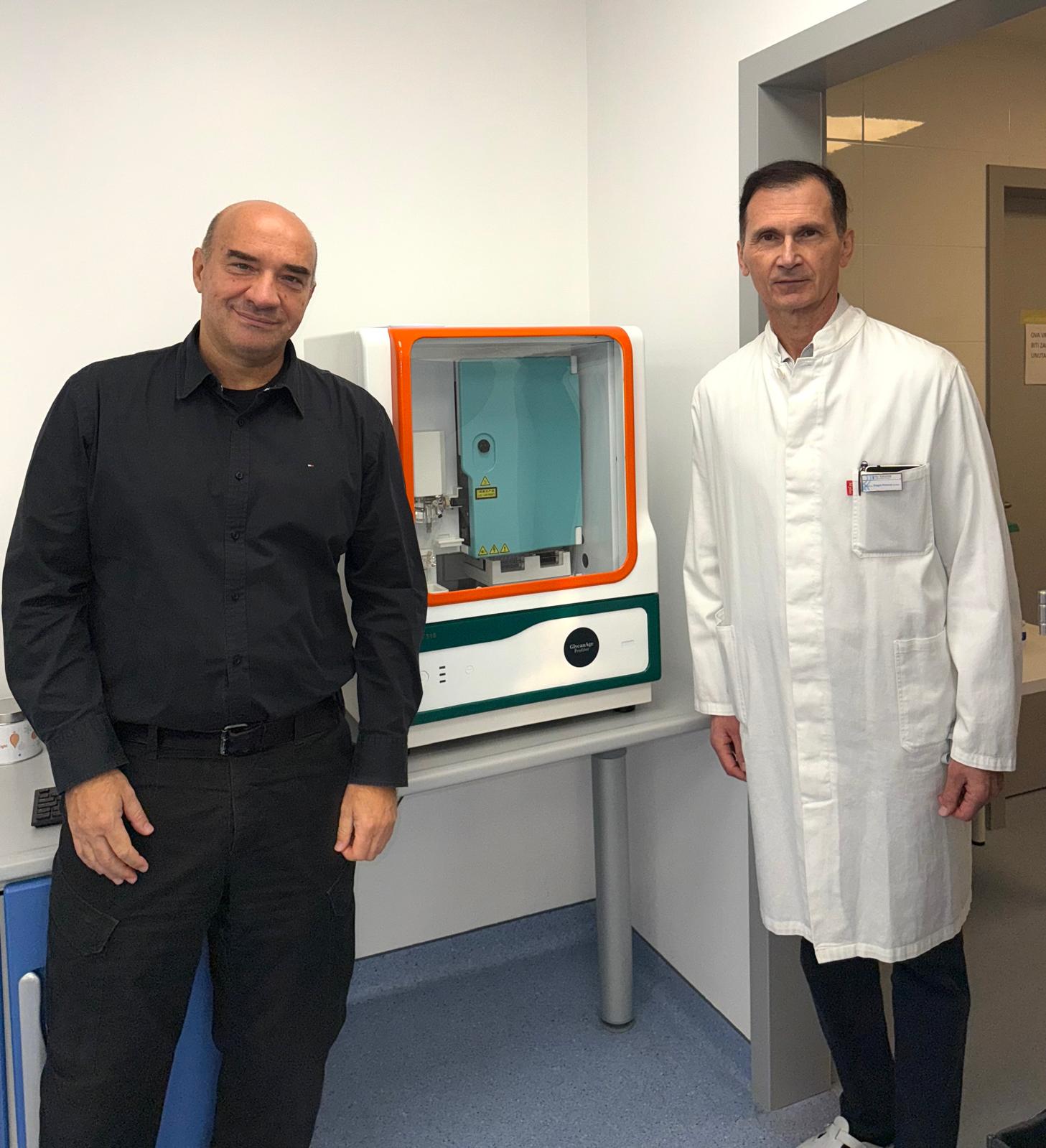
Gordan Lauc – Dragan Primarac
Why medicine needs new biomarkers
Gordan Lauc emphasized that the key problem with medicine today is that it is still imprecise. “Most drugs don’t work for most people. Patients spend years getting diagnosed, years finding the right therapy, often with serious side effects, and we still don’t have good biomarkers for personalised medicine.”
Much of that, he argues, comes from an overreliance on genetics.
“Genes explain only a small fraction of disease risk,” Lauc said. “Most chronic diseases are driven by lifestyle, environment, and how we live. For that, we need modifiable biomarkers, and glycans are probably the class of biomarkers that will dominate diagnostics in the next 50 years.”
Unlike DNA, glycan patterns change dynamically in response to inflammation, stress, metabolic health, and interventions, making them particularly suited to preventive and longitudinal care.
“Genomics gives you the blueprint,” Lauc said. “But health is not static. To truly personalise medicine, you need biological signals that change with time and capture how the body is responding.”
First clinical indications: heart disease and women’s health
GlycanAge is initially focusing on a limited number of clinical indications, starting with cardiovascular disease.
“You cannot do everything at once,” Lauc said. “Our first focus is preventing cardiovascular events, particularly secondary prevention.”
While reimbursement systems in many countries do not cover preventive testing in healthy individuals, preventing a second heart attack or stroke is a different matter.
“Once a patient has already had an event, preventing the next one is something healthcare systems will reimburse,” Lauc explained. “That makes secondary prevention the fastest route into hospitals.”
The second major focus area is female health, an area Lauc describes as systematically neglected.
“Medicine has been an all-boys club for decades,” he said. “Women are more biologically complex, especially because of hormonal cycles, so they’ve often been excluded from research. The result is misdiagnosis; women spending years being told they have depression or fibromyalgia, when the underlying issue is hormonal change.”
GlycanAge founders believe its biomarkers may help identify transitions such as perimenopause earlier and more accurately, offering clinicians an objective signal where few exist today.
Two decades in the making
Lauc began working on glycobiology more than 20 years ago, building what has become one of the world’s research hubs in the field. “For a long time, this was pure research,” he said. “Glycans were like the dark matter of biology, hugely important, but technically very hard to measure.”
Fifteen years ago, that research led to the discovery of a glycan-based ageing clock, which eventually became GlycanAge’s first commercial product. But because ageing is not classified as a disease, its early applications remained largely outside regulated healthcare.
“Now the situation is changing,” said Nikolina Lauc, Co-founder and CEO of GlycanAge. “Hospitals are moving toward prevention, and we’re finally translating over €40 million worth of grant-funded research into clinical tools.”
Scaling globally, with Europe at the core
GlycanAge currently employs over 30 people, with the majority of R&D, including clinical development and software, based in Croatia. The company is headquartered in the UK, with commercial, finance, and marketing functions split between the UK and Bulgaria.
More than 60% of revenue already comes from the US, despite the company having no permanent staff there, something this funding round aims to change.
“Expanding our commercial presence in the US is a priority,” Nikolina Lauc said. “At the same time, Europe remains the core of our scientific and clinical development.”
Looking ahead, the company’s ambition is straightforward but ambitious.
“Our goal is to make glycan testing part of standard preventive diagnostics,” said Gordan Lauc. “Something that everyone over 30 can access through their healthcare provider, not as a futuristic concept, but as routine care.”