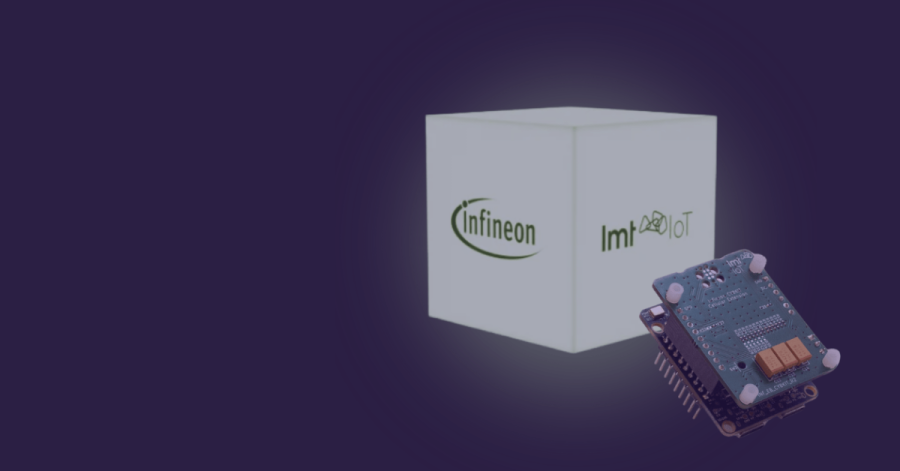


Latvian LMT IoT and Austrian Infineon Technologies AG have launched a new mentorship program designed to help startups and product companies accelerate the development of IoT devices that combine edge AI with low-power cellular connectivity.
The program targets teams building connected solutions across industries including industrial monitoring, predictive maintenance, environmental sensing, smart agriculture, asset tracking, and smart building systems. Participating companies will receive free hardware, technical mentoring, and direct engineering support aimed at helping them move from concept or prototype to real-world pilot deployment.
Applications for the current intake are open until July 31, 2026.
Combining edge AI with low-power cellular connectivity
At the core of the initiative is the integration of Infineon’s edge AI hardware portfolio with LMT IoT’s cellular connectivity infrastructure. Through LMT IoT’s extension board, developers can connect Infineon AI kits to LTE-M and NB-IoT networks with reduced setup complexity, allowing teams to begin transmitting device data to the cloud more quickly.
The companies say the program is especially relevant for products that process data locally, minimize cloud dependency, operate on battery power, and send only essential information over cellular networks.
“We are proud to support developers and startups with robust and easy-to-use hardware that helps transform ideas into real-world, connected solutions,” said Andreas Mühlberger, Strategic Partner Manager at Infineon Technologies Austria, driving startup and university collaborations through the Co-Innovation Program.
“Infineon’s strong microcontroller portfolio and Deepcraft™ software solutions offer end-to-end Edge AI and best-in-class system performance. The combination with ultra-low-power connectivity is a key enabler for the next generation of IoT applications.”
Focus on practical engineering support
According to Valters Skrastins, the program is designed to address the technical barriers that often slow down hardware startups and product teams.
“Hardware is hard — especially for teams building new connected products with limited engineering resources,” Skrastins said. “This program gives companies a shortcut through some of the most complex parts of the development process — cellular connectivity, edge AI integration, hardware bring-up, and prototype troubleshooting.”
The mentorship program does not take equity and has no participation fee. Accepted companies will receive hardware at no cost, while selected teams will gain access to deeper one-to-one technical engagement based on technical readiness, product fit, and commercial potential.
Participants will go through an application review process followed by introductory technical consultations. Accepted teams will receive hardware shipments and ongoing support throughout the prototype phase.
LMT IoT engineers will provide guidance on system architecture, firmware considerations, connectivity setup, integration, and troubleshooting. The initiative also includes expert webinars and live Q&A sessions focused on implementation, testing, and scaling connected IoT products.
Latvia-Austria collaboration highlighted
The initiative has also been recognized by the Investment and Development Agency of Latvia as a notable milestone in Latvia-Austria technology cooperation.
“Latvia’s technology ecosystem has strong capabilities in connectivity, IoT, and applied engineering,” said Inga Ulmane. “We are pleased to see LMT and Infineon engaging around a practical program that gives startups and product companies a clearer path from prototype to pilot.”
Andreas Mühlberger and Inga Ulmane are both speaking at the The Recursive CEE Forum during ViennaUP on May 20. Mühlberger will discuss how corporates can support startups and the opportunities this creates. Ulmane will join a panel discussion on Building Ecosystems For 2036, exploring the intersection of digital transformation, attracting and fostering talent, cross-border investment, and policy agility. Save your spot.