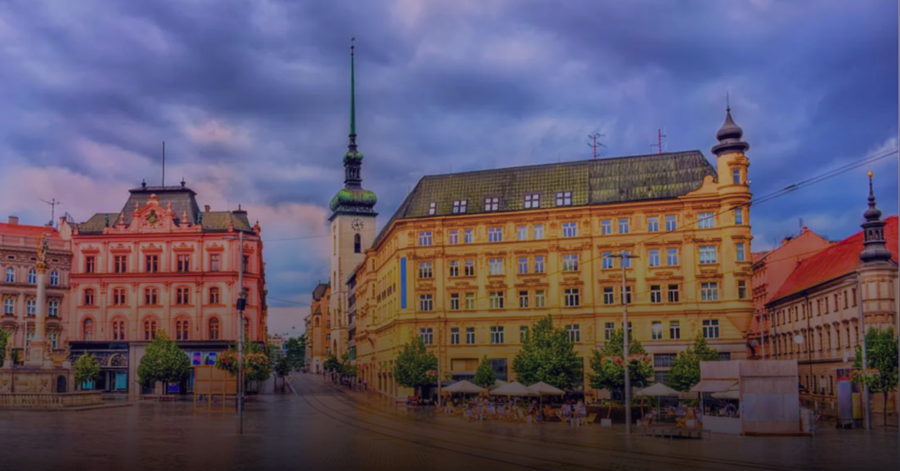


Once dubbed the “Czech Silicon Valley,” Brno is moving beyond comparison. With a billion-euro R&D ecosystem, major acquisitions, and a key role in Europe’s chip strategy, the city is carving out its own identity as a global tech powerhouse.
Total investment in research and development in the South Moravian region just topped €1.04 billion, an 8.3% jump from the previous year. While Prague often grabs the headlines, this surge in spending confirms what many in the tech community have known for years: Brno, the Czech Republic’s second city, has quietly built an economic engine fuelled by deep tech, specialized manufacturing, and a powerful academic backbone. Its strategic investment and focused expertise is now paying significant dividends.
A tale of two sectors
The region’s economic strength is built on two pillars that have seen explosive growth. Corporate R&D spending has soared by 73% over the last decade, hitting a record €610 million in 2024.
The IT sector leads, accounting for €246 million, more than double its investment since 2015. It’s an ecosystem that nurtures both global players and dynamic startups, with a workforce of over 33,000 IT specialists.
But the real surprise lies in advanced manufacturing. Investment in the production of electronic and optical devices has more than quadrupled since 2015, now standing at €90.9 million. Together, these two sectors are responsible for more than 83% of the region’s total R&D investment growth over the past nine years.
This fusion of a strong development culture and a deep industrial base creates a competitive advantage, especially as companies look to nearshore production and supply chains within Europe.
The world’s window to the nano-world
Brno’s most unique specialization is in electron microscopy, a field where it is an undisputed global leader. The city is home to giants like Thermo Fisher Scientific and local champions TESCAN and Delong Instruments. This cluster is so significant that it accounts for a substantial share of the world’s production of electron microscopes, one of the most knowledge-intensive products globally.
The ecosystem’s value was recently underscored by a landmark deal. In 2025, Japanese tech firm Shimadzu announced its acquisition of TESCAN for an estimated €568 million.
For investors, it was an extraordinary return, coming just three years after The Carlyle Group bought the company for €280 million. The sale is more than just a successful exit; it’s a validation of the world-class technology being developed in Brno.
This is an ecosystem where major corporations like Thermo Fisher collaborate with local startups such as Advascope to develop next-generation detectors, pushing the boundaries of what is possible.
At the heart of Europe’s chip strategy
Closely tied to its microscopy prowess is Brno’s growing importance in the semiconductor industry. The region is a powerhouse for chip design, hosting around 500 experts and key development centres for companies like Onsemi, NXP Semiconductors, and Codasip, a pioneer in RISC-V technology.
In a significant move to bolster the continent’s technological sovereignty, the Czech Semiconductor Centre was launched in Brno in 2025. Based at the Brno University of Technology (BUT), the centre aims to support European startups and SMEs in designing their own semiconductor solutions.
The ambition is clear, as Karel Masařík of the Czech Semiconductor Centre puts it, “Our goal is to create a strong foundation for European startups and SMEs to design their own semiconductor solutions in the Czech Republic.”
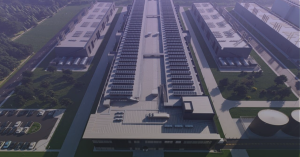
This initiative is complemented by a massive €1.8 billion investment by onsemi to expand its chip production in the wider region, the largest direct foreign investment in the country’s modern history.
Academia, research, and industry converging
The city’s role as a testbed for future technologies was further solidified in 2026 with the launch of the Open 5G Hub. Part of the BVV Living Lab, this large-scale environment provides a private 5G network for validating solutions in smart city management, Industry 4.0, and autonomous mobility. Funded by the EU Recovery Plan, the hub brings together industry, academia, and public institutions to test real-world applications from logistics to traffic monitoring, positioning Brno as a key innovation centre for 5G-driven digital ecosystems.
The talent pipeline for these advanced industries is fed by the city’s universities. With over 68,000 students, Brno is a major academic centre. Critically, more than half of them are enrolled in STEM and related fields, with the number of IT students growing by over 12% since 2020.
This deep connection between academia, research, and industry is perhaps Brno’s greatest asset, ensuring that as the city’s tech ambitions grow, so too will its pool of world-class talent.