In the second half of 2025, I noticed a pattern in our Fund IV fundraising conversations at Eleven VC. One after another, institutional LPs – mainly from Europe – told us some version of the same narrative: they had made a strategic decision to move away from seed funds and concentrate their...
The next phase of AI value creation will be driven by narrow, deeply embedded systems that understand how specific industries actually operate. This is why I see vertical AI emerging as one of the most investable niches as we’re heading into 2026.
Why I’m cautious about horizontal AI...
The results of the US elections and the ongoing conflict in Ukraine have fundamentally redrawn Europe’s investment map. Defense technologies, which were on the fringes of interest just a few years ago, have become one of the fastest-growing segments. Their share of the European VC market has jumped...
You wouldn’t hire a mechanical engineer who only uses AI-generated blueprints. You wouldn’t trust a doctor who only uses ChatGPT for diagnosis. Yet when it comes to hiring AI partners, most companies don’t know what questions to ask.
This matters more than teams realize, as the...
Managing contracts isn’t just a tick-the-box legal formality — it’s a full-on business process that directly affects how smoothly your projects run, and even how happy your clients are. Still, many CEOs treat contracts like annoying paperwork and simply hand them over to the lawyer with...
AI is transforming how companies operate, make decisions, and interact with customers. But as businesses rush to adopt new tools and increasingly autonomous AI agents, a critical question emerges: Are they moving faster than their security and governance can keep up?
In this episode of The Recursive's Roundtable, we explore the growing tension between innovation and control, and what it takes to adopt AI responsibly without slowing down progress.
The discussion brings together three experts from the AI, technology, and telecommunications sectors:
The conversation explores the risks of shadow AI, the differences in risk appetite between startups and large enterprises, and the challenges of protecting sensitive corporate and personal information. The speakers also discuss the role of trust, employee education, and human oversight, as well as AI's potential to strengthen cybersecurity by identifying vulnerabilities before attackers exploit them.
Key topics discussed:
☑️ Innovation vs. regulation: Is Europe's approach to AI governance slowing down innovation and putting European companies at a competitive disadvantage?
☑️ Data privacy and shadow AI: What happens to sensitive corporate and personal data shared with AI tools, and how can companies manage the risks?
☑️ AI agents and human oversight: How much autonomy should businesses give AI systems, and when should humans remain in control?
☑️ Trust, risk, and cybersecurity: How can companies balance AI adoption with security, and can AI itself become a tool for identifying and preventing cyber threats?
Three guests, three very different jobs, one thing in common: they're all in their twenties and already taking on a level of responsibility that usually comes later in a career.
In this episode of The Recursive Roundtable, we talk with Viktoriya Markileva (Head of Space Services at EnduroSat), Georgi Nichev (Marketing Specialist at Helios Marine, Co-Founder of Scylla), and Maria Nikolova (Strategic Partnerships Development Manager at BESCO) about what it's actually like to be trusted with real responsibility this early — what makes someone trust you with it, how they handle it, and whether a career needs to follow a clear path at all.
In this episode, we explore:
🟣 How Gen Zs think about failure, 🟣 what hustle culture looks like from the inside, 🟣 what progress actually means to them, 🟣 and whether they'd be willing to wait years for the next step in their career.
💡 This conversation is essential for entrepreneurs looking to hire young talent, and for any Gen Z professionals wondering if they are ready to take the leap into a leadership role.
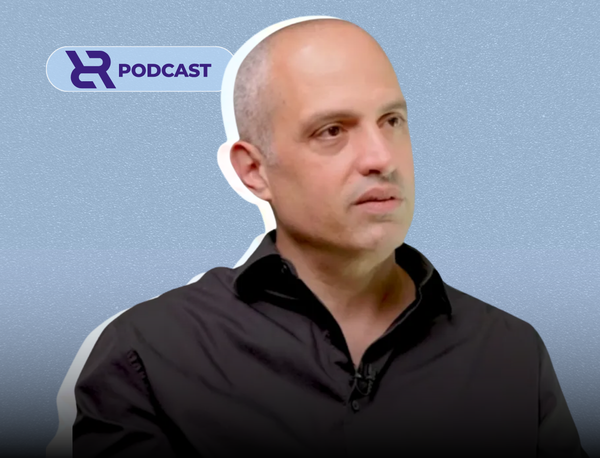
In this episode of The Recursive Podcast, we sit down with Rakuten Viber CEO Ofir Eyal to discuss how the company is evolving beyond messaging through its partnership with OpenAI, the rise of AI-powered communication, and the long-term vision behind building a "super app."
The conversation explores how the company approaches privacy and responsible AI adoption, and why Europe has yet to embrace the super app model seen across Asia.
Ofir also reflects on his own journey from product manager to CEO, the leadership lessons he learned while navigating one of Viber's most challenging periods after the outbreak of the war in Ukraine.
In this episode:
☑️ Why Viber partnered with OpenAI ☑️ The future of AI inside messaging apps ☑️ Can Europe build a successful super app? ☑️ Privacy, security, and responsible AI adoption ☑️ How Viber makes money beyond messaging ☑️ Leadership lessons from scaling a global platform ☑️ Rebuilding after losing 40% of the business overnight
🎙️ Subscribe to The Recursive Podcast for conversations with the founders, investors, and technology leaders shaping the future of innovation across Central and Eastern Europe and beyond.